
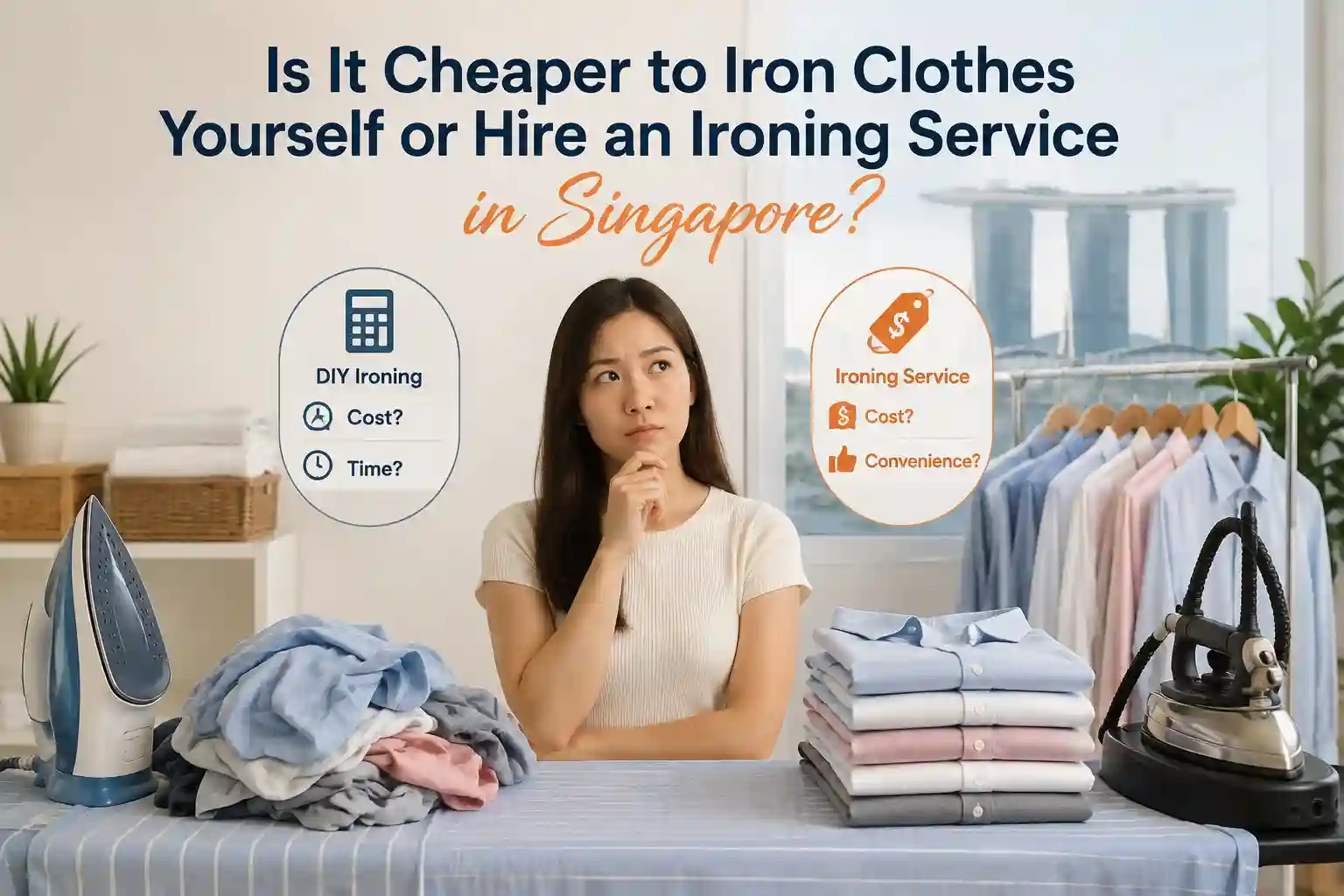
For corporate professionals and busy families in Singapore, maintaining a sharp, wrinkle-free wardrobe is a daily necessity. Whether it is a crisp dress shirt for board meetings or delicate blouses for weekend gatherings, well-pressed clothing projects confidence and professionalism.
However, keeping up with a mound of laundry requires a commitment of time, energy, and equipment. When managing household chores, many homeowners face a practical question: Is it financially smarter to handle your own ironing, or does it make more sense to outsource it?
While many residents search online for cheapest ironing services in Singapore, evaluating the true cost of ironing requires looking beyond simple price tags. By breaking down direct cash costs, electricity usage, and the trade-off between personal time and professional convenience, the true choice between DIY and professional services becomes much clearer.
The True Cost of DIY Ironing: Cash Expenses vs. Time Value
At first glance, ironing your own clothes appears to be the cheapest option because it requires no out-of-pocket payment to a service provider. However, evaluating the DIY approach requires separating direct cash expenses from intangible time costs.
1. Direct Out-of-Pocket Expenses (Cash Costs)
If you already own an iron and an ironing board, the direct ongoing cost of ironing at home is minimal.
Electricity Consumption: High-output steam irons typically draw between 1,800 to 2,400 watts. For most households, the electricity used by an iron for a few hours a week is relatively small compared with the overall value of the time spent ironing.
Equipment Depreciation: Quality steam irons and sturdy ironing boards suffer gradual wear and tear, scale buildup from tap water, and eventual pad wear. Replacing them every few years represents a minor long-term capital cost.
Garment Replacement Risk: Incorrect heat settings can occasionally damage delicate fabrics like silk or wool. Replacing an expensive garment can quickly offset any small savings achieved by ironing at home.
Summary: From a pure cash-flow perspective, DIY ironing is almost always the cheapest method if you already have functional equipment.
2. The Intangible Expense: Personal Time
The primary “cost” of DIY ironing is not financial—it is time. For households with several work outfits to prepare each week, washing, drying, sorting, and ironing can take several hours of weekend time.
While time is not a direct monetary fee, spending several hours over a hot iron after a long workweek comes at the expense of rest, family time, or personal hobbies. For many busy residents, the decision to look into trusted cleaning services in Singapore is driven less by arithmetic and more by the desire to reclaim free time.
Comparing Common Ironing Service Pricing Models in Singapore
Ironing and laundry services in Singapore commonly use several pricing models, including per-item pricing, hourly domestic service, and bundled laundry packages:
| Pricing Model | How It Works | Typical Market Characteristics | Best Suited For |
|---|---|---|---|
| Pay-Per-Piece (Drop-Off / Dry Cleaners) | You pay according to the number and type of garments. | Itemized pricing based on garment complexity; may have minimum order requirements. | Low volume; occasional formal wear or suit pressing. |
| Hourly Domestic Cleaning | A helper irons as part of a general home cleaning booking. | Billed by overall booking hours; requires client to provide ironing equipment. | Medium-to-high volume; combining ironing with house cleaning. |
| Wash & Press Packages | Laundromats or services bundle washing, drying, and pressing. | Pricing varies by total weight, bag size, or item count. | Full laundry outsourcing for households without washing machines. |
Option A: Pay-Per-Piece Services
Drop-off services or specialized laundromats charge an itemized fee per garment depending on the complexity of the clothing item.
Pros: Offers an itemized approach where you pay specifically for what you need pressed, ideal if you only have a few formal items each month.
Cons: Costs can add up quickly for large volumes if you generate a high volume of ironed pieces each week.
Option B: Hourly In-Home Cleaning with Ironing
Some domestic cleaning providers allow laundry pressing to be included as part of standard home maintenance visits. Scheduling a once a week cleaning service in Singapore that accommodates laundry prep alongside general upkeep is a common approach for busy households.
Pros: Highly versatile for households with larger laundry piles. Because the service is billed hourly, a helper can handle a mix of routine house cleaning and wardrobe pressing within the same session.
Cons: Requires the customer to provide a reliable iron and ironing board at home.
DIY vs. Outsourcing: Which Option Fits Your Lifestyle?
Because every household has different priorities, neither option is universally “better.” The right choice depends on your budget, laundry volume, and available leisure time.
When DIY Makes the Most Sense
You have a small laundry volume (1 to 5 formal items per week).
You already own good equipment and don’t mind spending an hour or two on weekend chores.
Keeping direct monthly household cash expenses as low as possible is your primary goal.
When Outsourcing Makes the Most Sense
You generate a large volume of work clothes every week.
Your weekdays are demanding, and you place a high value on keeping your weekends completely free.
You prefer having routine domestic chores—such as bathroom cleaning, floor care, and laundry care—handled together during a single visit.
5 Practical Hacks to Lower Your Effective Ironing Costs
Whether you iron at home or use an hourly service, a few simple preparation steps can help reduce ironing time and improve efficiency:
Pre-Sort Garments by Fabric Type: Group clothes into low-heat (synthetics, silk) and high-heat (cottons, linens) piles. This eliminates waiting for the iron temperature to adjust between different items.
Unbutton Shirts in Advance: Unbutton collars, cuffs, and front plackets while folding or hanging laundry so items are immediately ready for the board.
Prevent Deep-Set Creases: Smooth out damp clothes and hang them straight out of the washing machine to avoid baked-in wrinkles.
Maintain a Quality Steam Iron: Providing a clean, high-output steam iron makes pressing significantly smoother and faster than using a lightweight dry iron.
Combine Ironing with General Housework: Instead of booking a standalone service, schedule laundry care alongside routine home cleaning to maximize the productivity of each session.
Integrating Laundry Care into a Smooth Home Routine
Managing household chores effectively comes down to creating a balanced routine that fits your lifestyle. Ironing does not need to feel like an overwhelming weekend burden when planned alongside overall domestic maintenance.
If you are evaluating how to structure your domestic chores, exploring related guides can help you build an efficient home care routine:
If you are deciding how frequently to schedule domestic support, our guide on Ad-Hoc vs. Weekly House Cleaning in Singapore: Which Service Is Right for You? breaks down the benefits of each scheduling option.
To protect delicate fabrics during domestic care, reading The Science of Steam Vs. Dry Ironing: Which Method Protects Your Premium Fabrics Better? ensures your garments remain in top condition.
If you want to streamline your schedule, exploring a 4-Hour Weekly Cleaning Routine for Singapore Homes: Keep Your Weekends Free offers practical strategies to optimize your home visits.
At Singapore Cleaning Service, ironing can be arranged as an in-home ironing service or included within suitable weekly house cleaning sessions when requested in advance. The available time should be planned according to the amount of ironing and other household tasks required.
For dedicated ironing sessions, see our ironing service in Singapore for current service details, booking requirements, and pricing.
Frequently Asked Questions (FAQ)
1. Is it cheaper to iron clothes yourself or hire an ironing service?
For most households, ironing at home is cheaper in direct cash terms if you already own an iron and ironing board. Hiring a service becomes more attractive when you have a large volume of clothes, limited free time, or want ironing combined with other household chores.
2. How are ironing services priced in Singapore?
Pricing varies significantly by provider, service type, garment complexity, minimum booking time, and whether ironing is bundled with general home cleaning. Drop-off services typically charge on a per-piece basis, while in-home helpers are usually hired on flat hourly rates.
3. Can I ask a part-time house cleaner to iron my clothes?
Some domestic cleaning services in Singapore allow clients to request ironing within their scheduled booking hours. Be sure to discuss this in advance so sufficient time can be allocated during the visit.
4. Do in-home cleaners bring their own iron and board?
Generally, no. For in-home hourly cleaning services, clients are expected to supply their own working steam iron, ironing board, and clothing hangers.
5. Is steam ironing better for clothes than dry ironing?
Steam ironing can make wrinkle removal easier by relaxing fabric fibres, but the appropriate temperature and technique depend on the material. Always follow the garment’s care label, particularly for silk, wool, and other delicate fabrics.
Conclusion
The cheapest option ultimately depends on what you value most. If you already own the necessary equipment and have a small amount of ironing, doing it yourself will usually cost less in direct cash terms. For households with larger laundry volumes or limited free time, outsourcing can offer better value by freeing up several hours and allowing laundry care to be combined with general home maintenance.
