
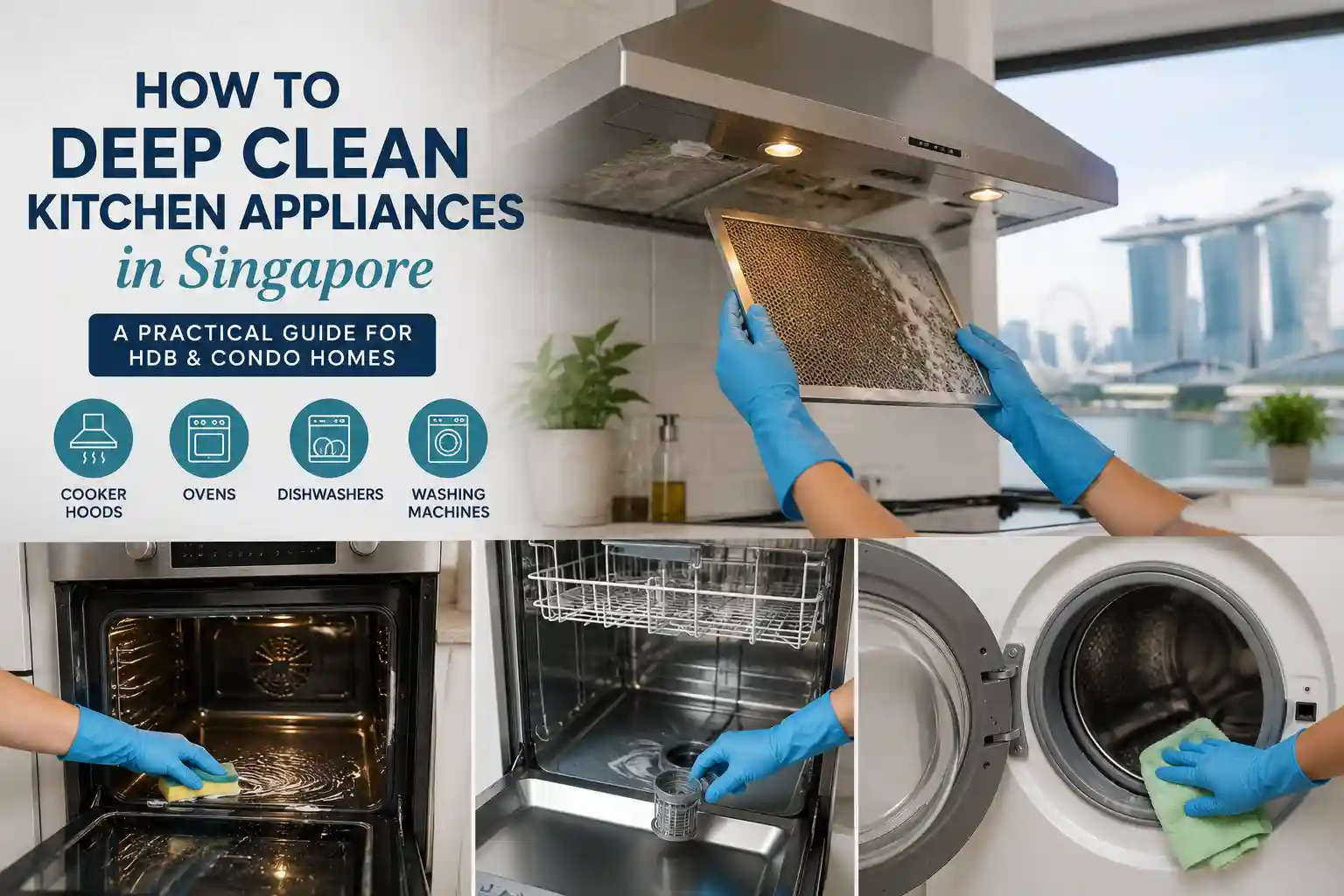
In Singapore’s vibrant culinary culture, the kitchen is the heart of the home. From stir-fries and curries to slow-simmered soups and weekend baking, our appliances work hard every day. However, frequent cooking combined with local humidity means appliances quietly accumulate layers of grease, food residue, and trapped moisture.
While counter tops and floors get regular attention, built-in and major appliances—such as cooker hoods, ovens, dishwashers, and washing machines—are often overlooked. Over time, trapped residue can reduce efficiency, create persistent odours, and shorten the lifespan of expensive kitchen investments.
Whether you are preparing for a tenancy handover or maintaining your own space, this practical guide walks you through cleaning your appliances safely and effectively.
Quick Key Takeaways
Cooker Hood Filters: Soak metal mesh or baffle filters in very hot water with degreasing soap every month to prevent sticky oil buildup.
Built-In Ovens: Use a natural baking soda paste for burnt food stains rather than harsh chemical sprays; avoid abrasive scrubbers on interior enamel.
Dishwashers: Focus on clearing trapped food debris and grease from bottom filters and spray nozzles to prevent sour odours.
Washing Machines: Wipe rubber door seals dry after laundry cycles to prevent trapped moisture and mildew.
1. Cooker Hoods & Range Filters: Banishing Sticky Grease Traps
If you cook regularly, your kitchen hood is your primary line of defence against airborne oil mists. Over time, oil mist cools and condenses on internal surfaces and filters, forming a tacky film that traps airborne dust particles.
Why Hood Filter Maintenance Matters
When hood filters become clogged with grease, airflow drops drastically. Fumes spatter back into your living room, and during high-heat cooking, heavy oil accumulation inside the filter poses a potential fire risk.
Step-by-Step Deep Cleaning Process for Hood Filters
Remove Metal Filters: Unlatch the metal mesh or baffle filters carefully.
Prepare a Degreasing Bath: Fill a deep sink or laundry basin with very hot water. Add 1/2 cup of baking soda and 2 tablespoons of concentrated degreasing dish soap.
(Caution: Exercise care when handling hot water to avoid scalds, and ensure your sink material can withstand high temperatures.)
Soak Thoroughly: Submerge the metal filters in the solution for 15 to 20 minutes to soften the grease.
Scrub Softly: Use a non-scratch nylon brush to gently scrub away remaining softened residue, especially in the tight crevices of layered mesh.
Rinse & Dry Completely: Rinse with warm running water and allow the filters to air-dry completely before reinstalling them.
Important Note: Always check your hood manufacturer’s care guide first. Some aluminum mesh filters are not dishwasher-safe or may discolour with certain cleaning agents. Non-washable activated carbon filters (common in ductless recirculating hoods) cannot be soaked and should be replaced every 4 to 6 months.
For households preparing for a lease handover, combining hood maintenance with a professional Move In Move Out Cleaning Service ensures that the entire ventilation unit meets strict landlord inspection standards.
2. Built-In Ovens: Eliminating Burnt Food Spills & Grease
High-heat baking and roasting bake food splatters into tough crusts on oven walls, which can produce unpleasant smoke during subsequent cooking.
Natural Baking Soda Paste Method
Many homeowners prefer to avoid chemical oven sprays containing harsh caustic ingredients that leave strong fumes inside enclosed kitchens. A gentle baking soda paste works well for most enamel interiors:
Mix the Paste: Combine 1/2 cup of baking soda with 3 tablespoons of water to create a spreadable paste.
Apply Inside Oven: Remove oven racks and side runners. Spread the paste over interior enamel surfaces, avoiding heating elements, gas igniters, and fan openings.
Let It Rest: Allow the paste to sit for 8 to 12 hours (or overnight) to break down grease and soften burnt residue.
Wipe Down: Spray white vinegar lightly over the dried paste to create a soft foaming action, then wipe clean using a damp microfiber cloth.
Manufacturer Safety Warning: Always consult your oven manual before cleaning. If your appliance features a Pyrolytic Self-Cleaning mode, follow the manufacturer’s instructions rather than applying manual cleaning products unless the manufacturer specifically permits them. Additionally, only dismantle double-glazed door glass if the manufacturer explicitly provides unlatching instructions.
For routine home upkeep, adopting a structured 4-Hour Weekly Cleaning Routine for Singapore Homes allows you to wipe down oven interiors immediately after baking, preventing stubborn carbon buildup from forming in the first place.
3. Built-In Dishwashers: Clearing Food Debris, Grease & Odours
While dishwashers wash kitchenware, they require periodic maintenance themselves. Food particles, oils, and detergent buildup accumulate inside filter assemblies and spray arms over time.
While Singapore tap water is moderately soft (meaning heavy mineral limescale is less of a concern than in hard-water regions), trapped organic food waste and grease in a damp, enclosed tub will quickly cause sour odours and bacterial slime.
Step-by-Step Dishwasher Sanitization
Clean the Bottom Filter: Remove the lower rack, twist out the cylindrical filter assembly at the bottom, and rinse it under warm running water using a soft brush to remove trapped food scraps.
Unclog Spray Arm Jets: Inspect the small holes in the rotating spray arms. Use a toothpick or paperclip to gently clear any trapped seeds or food particles.
Run a Maintenance Cycle: Follow your dishwasher manufacturer’s instructions and use a dishwasher-cleaning product approved for your appliance. Run the recommended maintenance or cleaning cycle according to the manufacturer’s instructions.
Manufacturer Care Warning: Always check your dishwasher manufacturer’s care instructions before using non-standard cleaning agents. Certain brand seals, rubber gaskets, or internal pump components can be sensitive to unapproved chemicals.
If managing deep kitchen maintenance alongside a busy work schedule becomes overwhelming, hiring reliable support via a part time cleaner Singapore service can help keep your kitchen hygiene in top condition week after week.
4. Washing Machine Care: Preventing Trapped Moisture & Odours
Although typically located in the service yard or kitchen area, front-loading washing machines and clothes dryers require regular attention. Singapore’s warm and humid climate can encourage mould growth and unpleasant odours when moisture remains trapped inside washing machine seals.
Preventing Mildew in Front-Loaders
Wipe the Rubber Seal: After completing your laundry for the day, wipe down the inside fold of the rubber door gasket (bellows) with a dry cloth to remove trapped water, lint, and detergent residue.
Leave Door Ajar: Keep the washer door propped open slightly when the machine is idle to allow internal air to circulate and dry out.
Monthly Drum Maintenance: Run a hot tub-clean cycle (or 60°C wash) using a dedicated washing machine cleaner or oxygen bleach to clear internal drum buildup.
Clear the Drain Pump Filter: Locate the access door at the bottom front of the machine, drain trapped water, and clean out lint, coins, and debris every 3 to 4 months.
Keeping laundry equipment clean prevents sour odours from transferring onto your freshly washed clothing. For delicate professional attire, pairing clean machines with expert ironing services in Singapore ensures your corporate wardrobe always remains crisp and presentable.
Appliance Deep Cleaning vs. Routine Maintenance Summary
| Appliance | Recommended Frequency | Key Focus Area | Main Issue Prevented |
|---|---|---|---|
| Cooker Hood Mesh | Monthly | Degreasing metal filters | Poor ventilation & greasy drips |
| Built-In Oven | Every 2–3 Months | Interior walls & door glass | Burnt food smoke & lingering smells |
| Dishwasher | Monthly | Bottom filter & spray nozzles | Trapped food decay & foul odours |
| Washing Machine | Monthly (Tub) / Weekly (Seal) | Rubber door seal & drain filter | Damp mildew smells & fabric staining |
Frequently Asked Questions (FAQs)
How often should I deep clean my kitchen appliances in Singapore?
As a general rule, cooker hood filters and dishwasher bottom traps should be cleaned monthly if you cook regularly. Ovens and washing machine drums typically require a thorough deep clean every 2 to 3 months. Wiping down visible surfaces and rubber seals weekly prevents heavy grease and moisture buildup between deep cleans.
Will cleaning appliances with household ingredients void my manufacturer warranty?
Using standard, gentle solutions like baking soda paste or warm soapy water generally does not affect warranties for manual surface cleaning. However, you should always check your appliance manual before using harsh chemicals, acidic vinegar, or commercial degreasers—especially on self-cleaning ovens, coated enamel, or sensitive rubber pump seals.
Can I clean aluminum cooker hood filters in the dishwasher?
It depends on the metal finish. While stainless steel baffle filters are usually dishwasher-safe, many aluminum mesh filters will oxidize, discolour, or turn dark grey due to high heat and harsh dishwasher detergents. Hand-soaking aluminum filters in very hot water with mild degreasing dish soap is the safest approach.
Why does my washing machine still smell musty after a tub-clean cycle?
Musty odours usually stem from trapped moisture, lint, and residual detergent inside the rubber door gasket or the drain pump filter. Ensure you manually wipe inside the rubber folds dry after every laundry load, keep the door slightly ajar when idle, and clear out the drain pump filter at the bottom front of the machine every few months.
Is pyrolytic self-cleaning safe for built-in ovens?
Yes, pyrolytic cleaning is an engineered feature present in many modern built-in ovens. It locks the door and raises internal temperatures to around 500°C to burn residue into fine ash. Always follow your manufacturer’s specific instructions, remove all metal racks and side runners beforehand, and ensure your kitchen is well-ventilated during the cycle.
When to Seek Professional Support
While routine maintenance can be managed with simple home care, deep cleaning accumulated grease from built-in kitchen appliances takes time and effort. If you are preparing for a tenancy handover, moving into a resale property, or resetting your home after major renovations, engaging a professional service simplifies the process.
At Singapore Cleaning Service, our experienced team provides thorough, reliable cleaning tailored to your schedule. Explore our full range of professional house cleaning services or contact our team today to find the right cleaning package for your home.
