
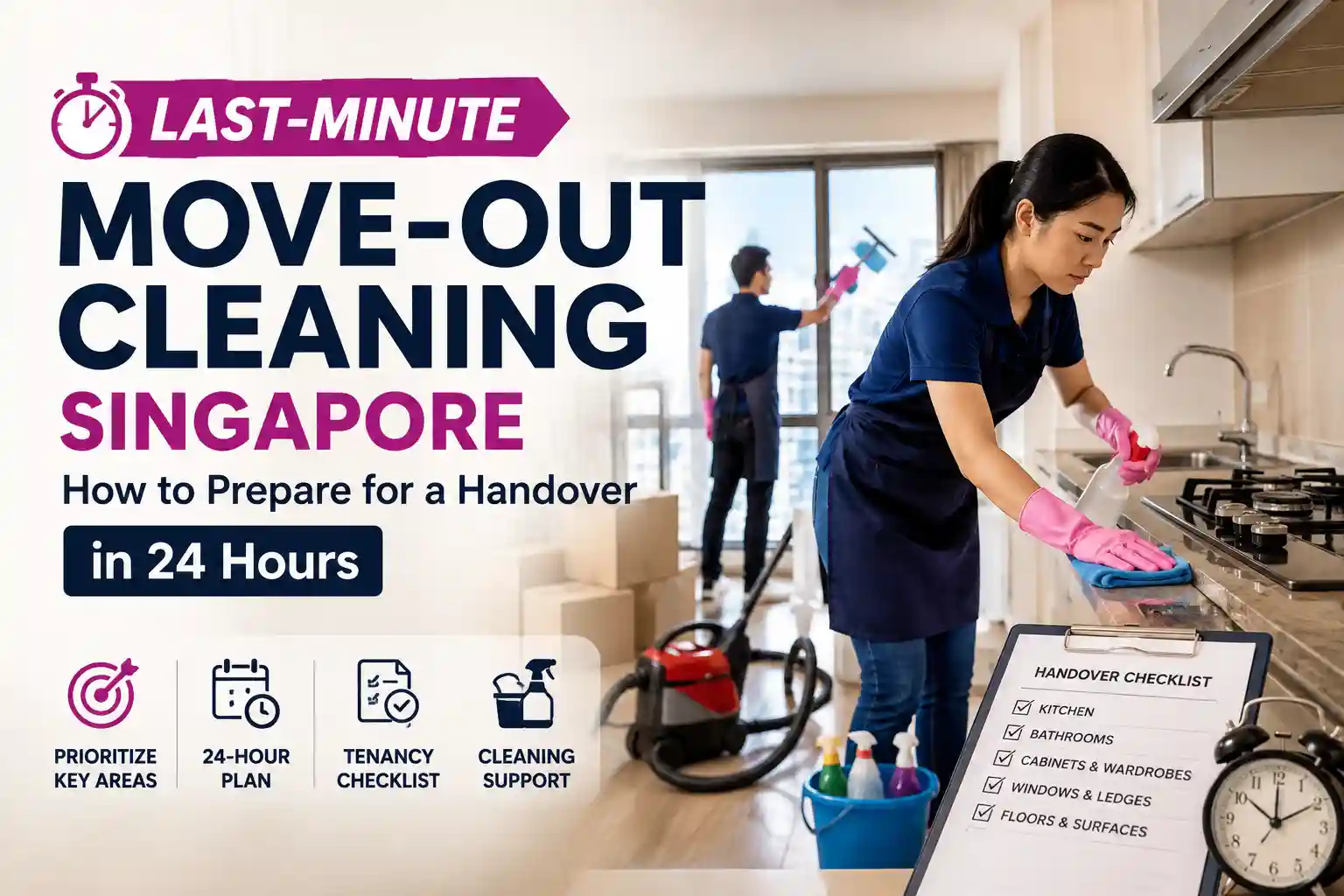
Discovering 24 hours before a tenancy inspection that your scheduled cleaner has canceled—or realizing that your DIY cleaning effort won’t pass a strict landlord check—is every tenant’s worst nightmare. In Singapore’s rental market, a stressful handover can quickly lead to deposit disputes, extra cleaning costs, or friction with property agents.
When time is running out, managing a short-notice move-out isn’t about working harder; it is about knowing which areas to prioritize, understanding your contractual obligations, and securing cleaning support quickly.
Here is a practical guide on what to do when you have only 24 hours before your handover.
What to Do First When You Have Only 24 Hours
When time is limited, panic is your biggest enemy. Trying to deep-clean every square inch of the property without a plan will leave you exhausted with an incomplete handover. Take these immediate operational steps first:
Assess the Real Remaining Workload: Walk through the property with a notepad. Separate simple cosmetic tasks (like sweeping) from high-effort areas (like degreasing an oven or stripping bathroom limescale).
Clear Remaining Belongings: Cleaners—whether yourself or a hired team—cannot clean floors, baseboards, or built-in wardrobes efficiently if loose items and packing boxes are scattered across the rooms.
Communicate Proactively: If your original cleaning plans fall through unexpectedly, notify your landlord or property agent as early as possible and ask whether the walkthrough time can be adjusted.
The 5 Areas to Prioritize Before Inspection
The kitchen is one of the areas most likely to attract attention during a handover inspection, alongside heavy-use sanitary spaces. To make the most of a tight deadline, prioritize your energy using this sequential handover checklist:
High-Priority Handover Sequence
Kitchen Degreasing
Cooker hood filters & housing
Oven and microwave interior
Top cabinet edges and oil film
Bathroom Sanitation
Shower screen soap scum and limescale
Drain hair traps and floor traps
Tile grout discoloration
Cabinets & Wardrobes
Interior shelf wipe-down
Vacuuming sliding door tracks
Windows & Accessible Ledges
Interior glass smudges
Window sill dust & track dirt
Floors & Visible Surfaces
Corner and edge vacuuming
Streak-free mopping
Baseboard dust removal
What the CEA Tenancy Template Says About Handover Cleaning
Your specific tenancy agreement is the primary legal document governing your handover obligations.
The Council for Estate Agencies (CEA) provides tenancy agreement templates that can be used as guides for residential leases in Singapore. However, these templates are not compulsory, and landlords and tenants are free to negotiate their own contractual terms.
CEA’s private-residential tenancy template includes provisions requiring the tenant to keep the premises in good and tenantable condition and to return them in good order and condition. It also includes a separate requirement to keep the premises clean and sanitary. The CEA end-of-tenancy checklist also covers the following:
Thoroughly cleaning interior spaces, including cabinets, wardrobes, appliances, windows, furniture, and fixtures.
Removing all personal belongings, rubbish, and unwanted furniture prior to handover.
Keeping your aircon servicing receipts available if your tenancy agreement requires them.
Ensuring electricity and water utilities remain connected during the inspection so appliances, lights, and taps can be tested.
Note: CEA’s tenancy templates are guides rather than compulsory contracts. Your signed tenancy agreement may contain different requirements, so check your own clauses before handover, or reference our guide on How to Match Your Move-Out Cleaning with the Official Singapore Tenancy Agreement Checklist for detailed alignment.
What You Can Do Yourself vs. When to Get Professional Help
When working against a 24-hour window, deciding between DIY effort and professional help depends on the condition of the home and the tools at your disposal.
| Task | DIY Feasibility in 24 Hours | When Professional Help Makes Sense |
|---|---|---|
| Basic Dusting & Sweeping | High — Easily handled with standard household tools. | If you are short on time because of packing or work. |
| Cabinet Interior Wipe-down | High — Simple once belongings are cleared. | If cabinets have heavy oil film or sticky residue. |
| Heavy Kitchen Degreasing | Low–Moderate — Household sprays may require prolonged scrubbing. | When ovens, cooker hoods, or other areas have thick grease buildup. |
| Bathroom Descaling & Grout | Low–Moderate — Stubborn deposits can take considerable time. | When multiple bathrooms require intensive cleaning. |
| High-Reach & Glass Cleaning | Low — Requires suitable access equipment and care. | When access is difficult or working at height presents a safety concern. |
A standard cleaning session may not be enough when the property needs intensive degreasing, descaling, and detailed handover preparation within a few hours. For urgent jobs, a team-based cleaning service can allow multiple high-effort areas to be worked on at the same time, depending on the property size, condition, and available manpower.
How to Book a Cleaning Team on Short Notice
If you decide to engage a professional provider for an urgent cleaning request, streamline the booking process by preparing key details in advance:
Property Type & Size: Specify whether it is an HDB flat, condo, or landed home, along with the exact number of bedrooms and bathrooms.
Current Property Condition: Be honest about heavy problem areas, such as grease build-up in the kitchen or scale in the bathrooms.
Belongings Status: Clarify whether the property is fully unfurnished, partially furnished, or if packing boxes remain in the rooms.
Handover Deadline: State the exact time your property agent or landlord is scheduled to arrive.
Before confirming your booking, ask the company what their policy is if specific areas are missed during the initial clean. Confirm whether rectification visits are included, charged separately, or subject to availability so you can plan accordingly.
When booking a professional move out cleaning service, clear communication ensures the cleaning crew arrives with the right equipment for your specific layout.
What If the Landlord Finds Problems During Inspection?
If the inspection identifies cleaning problems, check your tenancy agreement and the inspection notes before agreeing to any security deposit deductions.
Request Specific Identification: Ask the landlord or agent to identify the exact areas that require rectification rather than accepting vague complaints.
Arrange a Follow-Up Window: Where possible, agree on a reasonable timeframe to rectify highlighted spots before any formal claims against your deposit are considered.
Document the Condition: Take clear, time-stamped photographs of the property immediately after cleaning and during the walkthrough.
If an inspection has already yielded disputed results, reviewing our guide on a Failed Move Out Inspection in Singapore? How to Save Your Security Deposit offers practical advice on resolving handover feedback systematically.
Frequently Asked Questions
Can I get a move-out clean scheduled on short notice?
Availability depends on daily team dispatch schedules. Contacting a cleaning service as early in the morning as possible increases the chances of securing an afternoon or next-day slot for urgent handovers.
Is aircon servicing included in standard move-out cleaning?
No. Chemical washing or general aircon servicing is performed by licensed aircon technicians rather than house cleaners. You should book aircon servicing separately and keep the official service receipts ready for your landlord.
Should I clean the property before movers take the furniture?
It is best to schedule deep cleaning after movers have completely removed all personal belongings and furniture. Moving heavy items inevitably creates fresh dust and scuff marks on floors and walls.
What happens if I can’t finish cleaning before the inspection time?
Prioritize the kitchen and bathrooms first. If time runs out, inform your property agent or landlord before the inspection, explain which areas remain unfinished, and ask whether you can rectify the specific issues after the walkthrough.
