
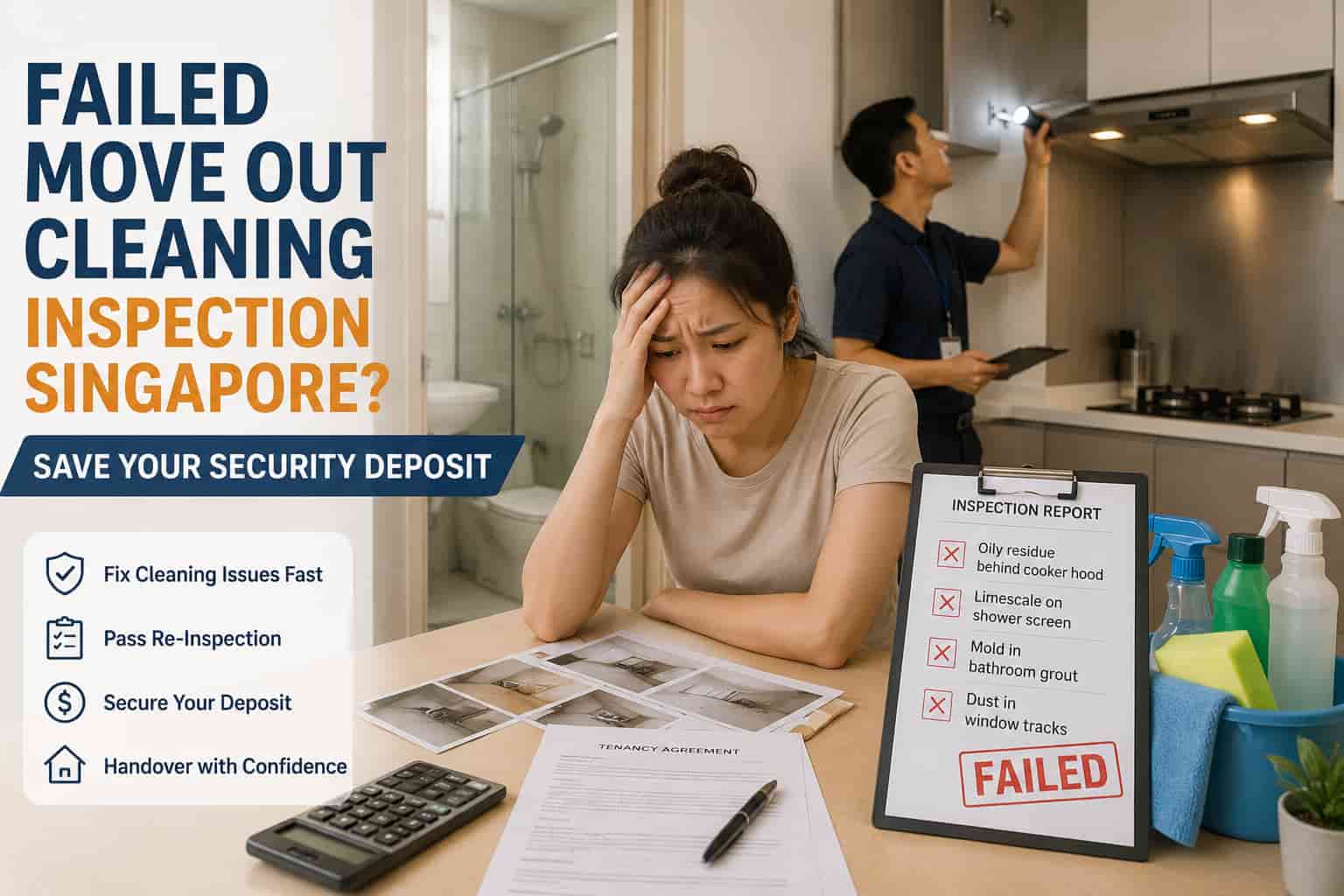
Your landlord shines a flashlight inside the kitchen cabinets, checks the bathroom grout, and quietly says, “I’m afraid this isn’t clean enough.” Suddenly, your security deposit is at risk. If this has just happened to you, don’t panic. Many failed handovers can be quickly resolved with a professional house cleaning service before your landlord takes matters into their own hands.
In Singapore’s rental market, a rejected move out cleaning inspection is incredibly stressful. Property agents and landlords look closely at details that are easy to miss during a busy move. If they decide to hire their own cleaners to fix the issues, they may deduct high fees directly from your deposit.
If your hard work didn’t meet their expectations, or if a cheap cleaning provider left the job half-done, you need to act quickly. This guide outlines how to handle a failed handover, protect your money, and get your apartment up to standard without losing your mind.
Note on Scope: A failed handover may involve both cleanliness issues and physical property damage. This guide focuses specifically on resolving cleaning-related inspection failures.
What Usually Causes a Failed Handover?
Many tenants assume that a general weekend tidy-up is enough to pass a final inspection. However, a standard sweep, mop, and surface wipe rarely satisfies a property agent or landlord. Handovers usually fail because of deep dirt and grime that builds up over years—areas that regular domestic tools struggle to clean.
   What Tenants Clean                     What Landlords Actually Check
 --------------------                  ----------------------------------
 [ ] Wiped countertops                 [ ] Oily residue behind the cooker hood
 [ ] Vacuumed floors                   [ ] Stubborn limescale on shower screens
 [ ] General window wipe               [ ] Mud and dust built up in window tracks
 [ ] Emptied refrigerator              [ ] Mold hidden in bathroom grout lines
The kitchen and bathroom are the most common friction points during a rental walkthrough. Cooking oil mist settles onto high surfaces and hardens over time, while Singapore’s high humidity causes rapid mold and hard water stains. When these areas are flagged, trying to scrub them away with basic supermarket sprays often wastes time you don’t have.
Step 1: Request a Clear List of Deficiencies
Do not rush back into the property and start scrubbing everything blindly. The moment your inspection fails, your immediate priority is to get specific, documented feedback from the inspection team.
Ask for Details: A vague comment like “the house is dirty” makes it hard to know what to fix. Ask the inspector to point out exactly which surfaces failed.
Take Your Own Photos: Document the disputed areas in clear daylight. This gives you a clear target to show professionals if you decide to call for backup.
Check Your Contract Timeline: Review your tenancy agreement. Most standard contracts give tenants a brief 24-to-48-hour window to rectify cleanliness issues before the landlord can legally hire their own contractors at your expense.
Tip: If your landlord provides a written defect list or inspection report, keep a copy. It helps you prioritize the cleaning work and reduces misunderstandings during the second walkthrough.
What Happens If You Ignore a Failed Inspection?
If you decide not to rectify the cleaning issues, your landlord or property agent may arrange professional cleaning on your behalf and deduct the cost from your security deposit, subject to the terms of your tenancy agreement. In some cases, disagreements over deductions can delay the return of your deposit and lead to a dispute. Acting quickly after a failed inspection usually gives you more control over the outcome.
Step 2: The Risks of Using On-Demand Gig Apps for Help
When you are stressed about a withheld deposit, it is tempting to open a casual gig app and book the cheapest helper available. However, relying on untrained workers using basic household tools is often how handovers fail in the first place.
A thorough move-out deep clean requires commercial-grade equipment and specialised cleaning solutions. Stripping hardened oil from a cooker hood or removing layers of calcium stains from glass shower screens requires commercial degreasers and targeted descaling agents that casual helpers rarely carry. If the defects are extensive, booking a professional end of tenancy cleaning service can save valuable time before the second inspection.
Before hiring any team to fix a rejected handover, it is highly recommended to learn how to audit a cleaning service to ensure they have the proper experience, insurance coverage, and professional tools needed for the job.
Step 3: Prioritize the Areas Landlords Inspect Most
To give yourself the best possible chance of passing the second inspection, focus your energy or your cleaning team’s efforts entirely on the key problem areas that the inspection team checks most intensely:
The Kitchen Grease Zones
During a final inspection, landlords and property agents often pay close attention to the areas tenants rarely clean. To get the kitchen up to standard, ensure the following spots are thoroughly addressed:
Exhaust Hood Filters: Dismantling the mesh filters and using professional degreasers to break down the sticky, built-up oil film.
Behind Appliances: Pulling out the refrigerator or built-in oven to clear the dust and grease that accumulates on the walls and floor behind them.
Cabinet Tops: Cleaning the flat tops of overhead cabinets, which naturally trap rising cooking oils and dust over time.
Bathroom Grime and Limescale
Bathroom inspections are notoriously strict due to moisture buildup. Passing the walkthrough requires targeting the areas that standard cleaners often miss:
Glass Shower Screens: Using commercial descalers to remove cloudy water stains and soap scum, restoring the glass to a clear finish.
Tile Grout and Corners: Scrubbing the spaces between tiles with specialized anti-mold treatments to clear out dark spores.
Floor Waste Traps: Opening up the drainage traps to remove hair and organic buildup, which helps eliminate stubborn bathroom and house sewage odor issues.
Sliding Window Tracks
Fine dust, outdoor soot, and rain residue mix together to form a thick grime inside the narrow tracks of sliding windows. Inspectors frequently slide their fingers along these tracks during a check. Clearing them completely requires wet vacuums to pull out the trapped dirt from the corners, followed by precise hand-wiping with specialized detailing cloths.
Managing Your Moving Schedule and Estate Rules
Resolving a failed inspection requires careful coordination, especially if you have already handed over parts of the property or are balancing tight deadlines.
Respect Condo Management Rules
Check your condominium’s moving and contractor hours before booking. Many MCSTs have designated contractor working hours and may restrict access outside approved hours, including Sundays and public holidays, which can block contractors from entering the premises or operating noisy equipment altogether. Schedule the cleaning window during standard approved hours to ensure the team gets seamless access to the lifts.
Clear the Space Entirely
Ensure all trash bags, leftover packing materials, and unwanted items are completely out of the way. If you are vacating a large property and have bulky furniture left behind, it is best to consult a specialized moving out cleaning checklist to manage waste disposal and deep cleaning sequentially. An entirely empty home allows cleaners to work much faster and ensures no areas are hidden from view.
Handling the Second Walkthrough Safely
When the property has been thoroughly cleaned, you are ready to meet your landlord or agent for the re-inspection. Approach this meeting with clear documentation to protect your interests:
Refer to the Original Inventory: Use the inventory report you signed when you first moved in. Landlords generally should not deduct your deposit for normal wear and tear, especially if your tenancy agreement distinguishes it from damage.
Keep Your Professional Invoice: Ensure your cleaning provider provides a clear, official receipt listing the work completed. Presenting a professional invoice from a registered Singapore business shows the inspector the issues have been addressed seriously.
Understand Customary Obligations: To prevent misunderstandings during future rentals, it is always helpful to know the local standard practices. You can read more about who pays for pre move-in cleaning and move-out cleaning to understand exactly how responsibilities are typically split between tenants and landlords.
Quick Pre-Reinspection Checklist
Before your landlord or agent arrives for the second walkthrough, review this quick scannable checklist to ensure no critical failure zones were missed:
[ ] Kitchen grease removed: Overhead cabinet tops, backsplashes, and surfaces are smooth and clean to the touch.
[ ] Cooker hood cleaned: Mesh filters are stripped of sticky oil film and carbon buildup.
[ ] Behind appliances checked: Dust and grease behind the fridge or built-in oven have been cleared.
[ ] Shower screen descaled: Cloudy hard water stains and soap scum have been removed from the glass.
[ ] Bathroom grout checked: Tile lines and corners are free of dark mold spores.
[ ] Waste traps cleaned: Floor drainage traps are clear of hair and biological buildup to prevent odors.
[ ] Window tracks vacuumed: Sliding channels are cleared of impacted outdoor soot and dust.
[ ] Property entirely emptied: All personal trash, boxes, and unwanted items are removed from the premises.
[ ] Professional invoice ready: You have the official commercial receipt from a registered cleaning business on hand.
[ ] Inventory report on hand: The original move-in inventory documentation is ready for reference.
If possible, complete the deep cleaning a few hours before the re-inspection so every area is dry, accessible, and ready for inspection.
Frequently Asked Questions
How fast can a cleaning company step in to fix a failed handover?
Many professional teams can arrange priority booking within 24 to 48 hours, especially during the week. To speed up the process, share the specific checklist or photos provided by your property agent so the team knows exactly what tools to bring.
Can a cleaning company guarantee my landlord will release the deposit?
No company can honestly make a 100% guarantee, because the final decision always rests with the landlord or agent. However, hiring a professional team significantly improves your chances of passing by restoring the property to a professional standard expected during a final handover and providing an official invoice as proof of work.
Can I clean the property myself to save money after a failed inspection?
You can attempt to clear the defects yourself, but keep in mind that landlords are often more critical during the second walkthrough. If you do not have industrial degreasers or the time to scrub window tracks and grout lines perfectly, hiring a professional service is often a safer way to protect your deposit.
Why do landlords insist on a professional cleaning invoice?
Property agents and landlords often view a professional cleaning invoice as evidence that the work has been completed by an accountable business, ensuring the home is completely ready for the incoming tenant to settle into their new space.
Resolve Your Handover Worries
Don’t let a rejected inspection put your security deposit at risk. If your landlord has flagged cleanliness issues at the end of your tenancy, Singapore Cleaning Service is here to help you get things back on track.
We know exactly what local property agents look for during a final walkthrough. Our experienced teams focus directly on your specific defect list, tackling tough kitchen grease, bathroom limescale, and dusty window tracks efficiently to help you meet inspection standards.
Contact Singapore Cleaning Service today for a prompt quotation. Let our end of tenancy cleaning specialists restore your home to inspection-ready condition so you can complete your handover with confidence.
