
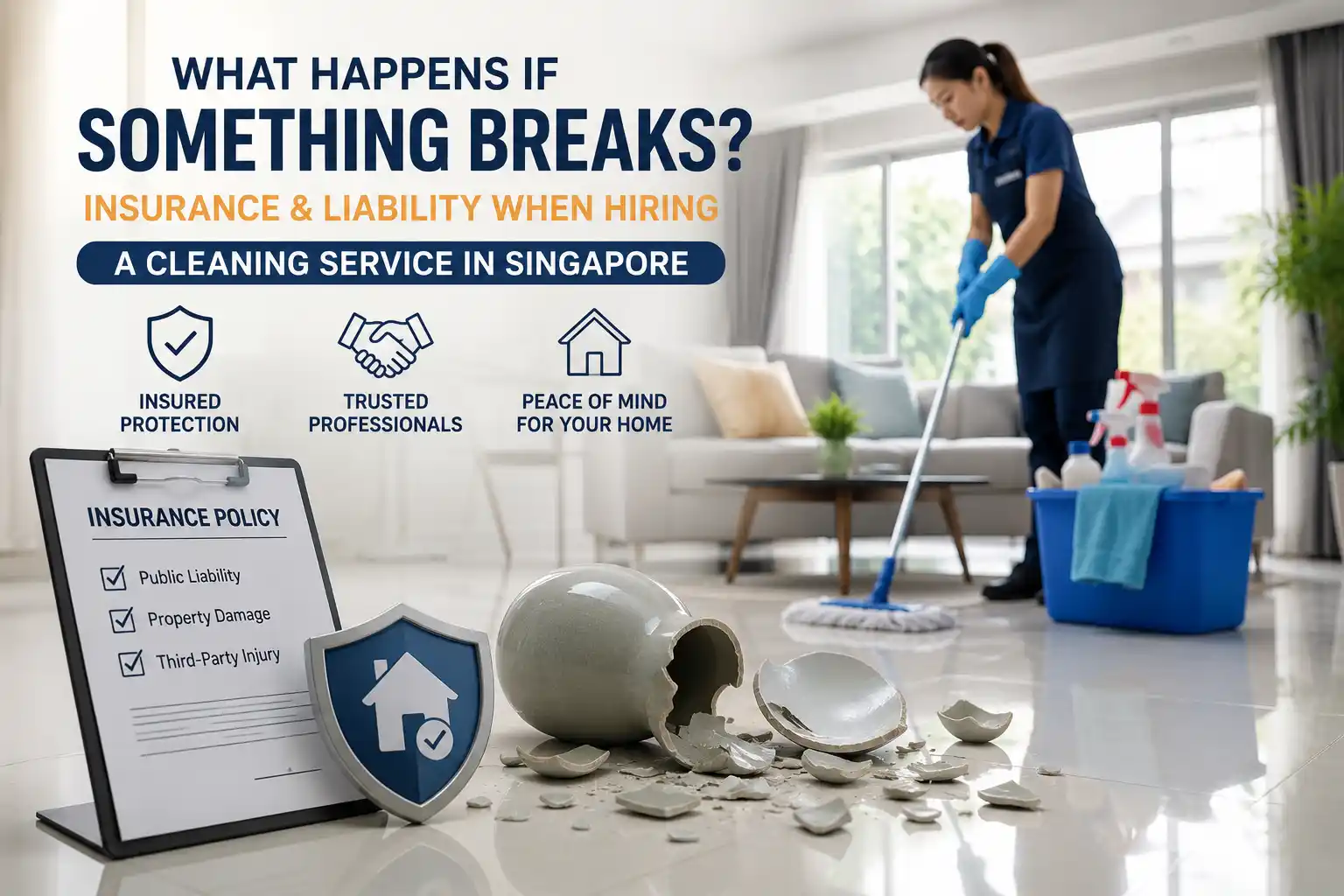
Inviting professional cleaners into your home requires a massive amount of trust. You are handing over your keys, opening your private living spaces, and giving strangers access to your most valuable possessions. Whether you live in a brand-new HDB flat in a young estate or a multi-story landed property filled with custom fixtures, your home is packed with financial and emotional investments.
Most cleaning sessions proceed smoothly, ending with sparkling countertops and pristine floors. But what happens when the unexpected occurs? A slip of the hand sends a premium crystal vase shattering onto the floor. An accidental drop scratches a brand-new television screen. A misplaced step chips an expensive Italian marble tile.
When property damage occurs, a stressful situation can quickly devolve into a nightmare of finger-pointing, hidden costs, and broken relationships if you do not understand how liability works. In Singapore’s competitive domestic services market, the difference between an insured home cleaning provider and an unprotected operator can cost you thousands of dollars.
This comprehensive guide breaks down the complex world of insurance coverage, liability rules, and consumer protections when hiring a Singapore Cleaning Service. Understanding these frameworks allows you to protect your home, secure your peace of mind, and know exactly what to do if something breaks.
The True Cost of Damaged Property in Modern Homes
Modern residential spaces in Singapore are filled with delicate, high-value materials and smart home technologies. The days when domestic cleaning simply involved a plastic bucket, a basic cotton mop, and a generic supermarket spray are gone. Today’s cleaning environments feature sophisticated surfaces that require precise, knowledgeable care.
Consider the replacement and repair costs associated with common household features:
Bespoke Carpentry and Quartz Counters: A single deep scratch on an engineered quartz countertop or a gouge in custom floor-to-ceiling kitchen cabinets cannot simply be wiped away; it often requires replacing entire sections.
Premium Natural Flooring: Marble, granite, and solid teak flooring are highly susceptible to physical impacts and chemical burns from incorrect cleaning solutions. Repairing acid-damaged marble tiles requires specialized diamond-pad polishing that costs a premium.
High-End Electronics and Appliances: From smart refrigerators with built-in touchscreen panels to delicate OLED television displays and premium multi-room sound systems, modern household gadgets are fragile and expensive to repair.
Luxury Wardrobes and Fabrics: Designer garments, delicate silk curtains, and imported wool rugs require careful handling. An incorrect iron temperature setting or a harsh chemical spill can ruin a premium fabric instantly.
When a mishap occurs, the financial impact can easily eclipse the cost of the cleaning service itself. This is why evaluating a service provider’s financial backing and legal accountability is just as crucial as checking their hourly rates.
Direct Booking vs. Gig Apps: The Insurance Divide
One of the most important factors dictating your financial protection during an accident is how you booked your cleaner. The Singapore market is generally divided into registered direct-booking businesses and on-demand gig platforms. Many homeowners mistake the two, assuming that any service booked via an internet search or smartphone application carries the same level of protection. This is an expensive misconception.
Direct-Booking Residential Cleaning Companies
When you hire an established, registered cleaning business directly, you are entering into a formal business-to-consumer contract. These companies employ their own vetted staff or deeply managed dedicated crews.
Because they operate as full corporate entities, reputable providers carry comprehensive commercial insurance packages. The company takes direct, legal responsibility for the actions of its workforce on your property.
On-Demand Gig Economy Platforms
Gig apps operate primarily as tech intermediaries or matchmaking platforms. They connect freelance, ad-hoc domestic workers with homeowners. If you read the fine print in the terms and conditions of casual cleaning apps, you will find extensive liability waivers.
Coverage varies between platforms, and some tech intermediaries explicitly state that the cleaners are independent contractors, not employees. Consequently, if a freelancer breaks a valuable item, the platform may disclaim legal responsibility, leaving you to chase an uninsured individual for compensation.
Always review the provider’s terms and insurance coverage before booking. Understanding this structural difference is a fundamental part of learning how to audit a cleaning service effectively before letting anyone cross your threshold.
Understanding Public Liability Insurance
If a home cleaning provider claims they are “fully insured,” it is essential to ask what specific policies they hold. A common form of protection offered by many established cleaning companies in the domestic service industry is Public Liability Insurance.
+-------------------------------------------------------------------------+
|                       PUBLIC LIABILITY INSURANCE                        |
+-----------------------------------+-------------------------------------+
| What It Covers                    | What It Excludes                    |
+-----------------------------------+-------------------------------------+
| * Direct damage caused by slips,  | * Pre-existing property wear        |
|   drops, or physical impacts.     |   and tear.                         |
| * Accidental breakages of home    | * Mystical disappearances or un-    |
|   fixtures and electronics.       |   proven theft (requires police).   |
| * Bodily injury to third parties  | * Deliberate damage caused by the   |
|   within the service venue.       |   homeowner or unauthorized guests. |
+-----------------------------------+-------------------------------------+
Public Liability Insurance is designed specifically to cover third-party property damage and bodily injury caused by the business’s operations. If a cleaner accidentally knocks over a high-end speaker system while vacuuming, or spills a bucket of water that warps your parquet flooring, the public liability policy steps in to underwrite the repair or replacement costs.
Without this policy, any compensation would have to come directly out of the cleaning company’s liquid cash reserves. If the service provider is small or refuses to cooperate, you face an uphill legal battle to recover your funds.
To better understand consumer rights relating to general insurance, the General Insurance Association of Singapore (GIA) provides information on industry practices and transparency for insured businesses.
The Legal Reality of “Wear and Tear” vs. Accidental Damage
One of the most common grey areas in home maintenance disputes is distinguishing between authentic accidental damage and pre-existing wear and tear. This distinction becomes critical during transitional periods, such as when you are executing a post moving out cleaning routine or setting up a pre move in cleaning Singapore appointment for a resale property.
Accidental Damage
This refers to a sudden, unexpected, and distinct event that causes structural or functional ruin to an item. Examples include dropping a heavy tool onto a porcelain sink, causing it to crack, or shattering a glass shower screen by striking it with a metal ladder.
Wear and Tear
This describes the natural, gradual deterioration of an object over time due to normal usage, age, and environmental factors. Examples include faded grout lines, minor surface scratches on a stainless-steel stove top, or brittle plastic latches inside an aging refrigerator.
Insurance companies will not pay out to replace an item that failed simply because it was old, fragile, or improperly maintained. For instance, if an old, sun-damaged plastic curtain bracket snaps under normal handling during a routine clean, it is generally classified as wear and tear.
However, if a cleaner aggressively wrenches a modern curtain track away from the ceiling structure, that constitutes accidental physical damage. Clear documentation of your home’s pre-service baseline condition is essential to protecting your interests. For high-value items such as artwork, antiques, or collectibles, taking timestamped photographs before the cleaning appointment can make any future claim easier to assess.
Step-by-Step Guide: What to Do Immediately If Something Breaks
If you return home or walk into a room and discover that an item has been broken during a cleaning session, your actions within the first few hours will dictate the success of your compensation claim. Follow this strict protocol to ensure your case is airtight:
Step 1: Secure the Scene and Take Photos
Do not clean up the broken pieces, throw away the damaged parts, or move the affected item immediately unless it poses an urgent safety hazard.
Capture High-Resolution Visual Evidence: Take multiple photos and wide-angle videos from various distances. Capture close-up shots of the specific break points, cracks, or stains, as well as wider shots showing where the item was located in the room.
Document Surrounding Areas: If a liquid spill caused the issue, photograph the spread of the fluid to show the scope of the impact.
Step 2: Notify the Management Instantly
Do not wait until the next day or the end of the weekend to lodge a complaint. Most commercial insurance policies require incidents to be reported within a strict window—often within 24 to 48 hours of occurrence.
Send Written Confirmation: Send an email or official messaging application text to the company’s customer support line. Include your booking reference number, the date and time of the service, the name of the assigned cleaner, a clear description of the item broken, and all your photographic evidence.
Request an Acknowledgment: Follow up with a phone call to ensure the management team has formally logged the issue in their tracking system.
Step 3: Establish the Valuation of the Broken Item
To process a claim, the insurance provider or the cleaning business will require clear proof of the item’s economic value.
Gather Receipts and Invoices: Locate the original purchase receipts, bank statements, or e-commerce order histories for the damaged asset.
Obtain Replacement Quotations: If the original receipt is unavailable, find a current retail listing showing the exact replacement cost for the same model, or secure an official repair quotation from an authorized service center.
Step 4: Cooperate with the Claims Assessor
For significant damage claims, the cleaning company’s insurance provider may dispatch a claims surveyor or loss adjuster to examine the property in person. Allow them access to inspect the item, verify the timeline of events, and determine if the incident aligns with the scope of their coverage.
How to Handle Theft and Missing Item Suspicions
While physical property damage is straightforward to document, allegations of missing items or theft are emotionally charged and legally distinct. Public liability policies do not cover mysterious disappearances, missing cash, or unproven allegations of theft.
If you suspect that an item has been stolen during a house cleaning service session, the management company cannot simply cut a check from their liability insurance. The legal burden of proof for criminal activity is exceptionally high.
To navigate this situation properly, you should first conduct a deep search of your property. Items are frequently misplaced, packed away accidentally by family members, or moved to alternative storage zones during a deep tidying process.
If you are certain an item is missing and suspect criminal activity, you must lodge a formal report with the Singapore Police Force (SPF). The police will interview relevant parties and collect forensic details if necessary.
Once the report is made, share the official police report copy and case number with the cleaning company’s management. A responsible service provider will suspend the worker involved pending an official investigation and cooperate fully with law enforcement. To eliminate this vulnerability entirely, always secure your jewelry, cash, financial statements, and small luxury goods in a locked safe or a secure, off-limits room before the cleaning crew arrives.
The Role of Existing Homeowner Content Insurance
Many Singapore residents assume that if a cleaner breaks something, they can simply claim it through their personal HDB fire insurance or private condominium homeowner content insurance policy. While this is theoretically possible depending on your coverage tier, it is rarely the wisest operational move.
Personal home content policies almost always carry an “excess” fee—a baseline amount you must pay out of pocket before the insurance company covers the remainder. If the broken item costs $300 to replace and your policy excess is $500, you cannot claim a single dollar.
Furthermore, filing multiple minor claims on your private home contents insurance can damage your risk profile. This frequently leads to significantly higher policy premiums when it comes time for your annual renewal.
It is also important to note that the legal liability sits with the party that caused the damage.
Your personal insurance provider may pay your claim first and then seek reimbursement from the cleaning company’s insurer through a process known as subrogation.
For this reason, many homeowners reserve their own contents insurance for major events such as fires or floods rather than minor cleaning-related incidents. Insisting that the cleaning company takes ownership of operational incidents is generally the more effective route.
Protecting Your Move-Out and Handover Checklist
The stakes surrounding property damage rise dramatically when you are preparing a rental property for its final walkthrough. If a cleaner accidentally damages an asset during an end of tenancy cleaning session, it doesn’t just cost money to fix—it can derail your entire lease termination process and compromise your security deposit.
If an item is broken at the eleventh hour, a strict property agent may reject your handover entirely, forcing you into a prolonged timeline dispute. To protect yourself from these high-stakes complications, verify that your selected cleaning team uses experienced staff trained specifically in handover dynamics.
A specialized team will know exactly how to safely maneuver heavy industrial wet vacuums through narrow spaces, protect delicate baseboards, and handle fixtures without causing structural wear. For a step-by-step breakdown of how to prepare your property sequentially to avoid these pitfalls, consult a structured moving out cleaning checklist to ensure every stage of your relocation remains safe, orderly, and fully protected.
Frequently Asked Questions
Is it important to hire an insured cleaning company in Singapore?
Yes. Hiring an insured cleaning company provides an added layer of protection if accidental property damage or third-party injury occurs during a cleaning session. Before booking, ask the company what type of insurance coverage they maintain and what it includes.
What should I do before a professional cleaner arrives?
Store valuables such as jewellery, cash, important documents, and small electronics in a secure place. If you own valuable artwork, antiques, or collectibles, consider taking photos before the cleaning appointment. You should also let the cleaning team know about any delicate surfaces or special cleaning requirements.
How can I choose a reliable cleaning company in Singapore?
Look for a registered cleaning company with experienced staff, transparent pricing, positive customer reviews, and clear communication. It is also helpful to ask about staff training, supervision, and whether the company carries appropriate insurance.
Does a professional cleaning company take precautions to protect my home?
Yes. Professional cleaning companies typically train their staff to use suitable cleaning methods and products for different materials and surfaces. They also follow standard operating procedures designed to reduce the risk of accidental damage during cleaning.
Hire with Confidence and Peace of Mind
Our professional cleaners are trained using standard operating procedures to handle premium materials, delicate appliances, and complex residential layouts safely. We take every step to ensure your home is respected throughout the entire booking.
We encourage customers to report any concerns immediately, and we investigate every operational incident promptly to ensure an efficient, fair resolution.
Looking for a professional cleaning company that values accountability as much as cleanliness? Our trained team follows established procedures and is committed to providing reliable service with clear communication from booking to completion. Contact Singapore Cleaning Service today for a free quotation.
Related Articles to Read
To help you navigate the process of hiring professional help and preparing your home for a seamless service, explore our comprehensive local guides:
- How to Audit a Cleaning Service in Singapore: Homeowner’s Quality Checklist – Learn how to evaluate professional standards, check operational procedures, and set clear expectations before your first booking.
- Cleaning Apps or Direct Booking: The Smarter Choice – A deep dive into the operational differences, cost structures, and safety safeguards between on-demand gig platforms and established agencies.
- 7 Things Most Professional House Cleaners Won’t Clean (And Why) – Understand the standard boundaries of residential home care, from hazardous materials to safety restrictions that protect your property and the workers.
