
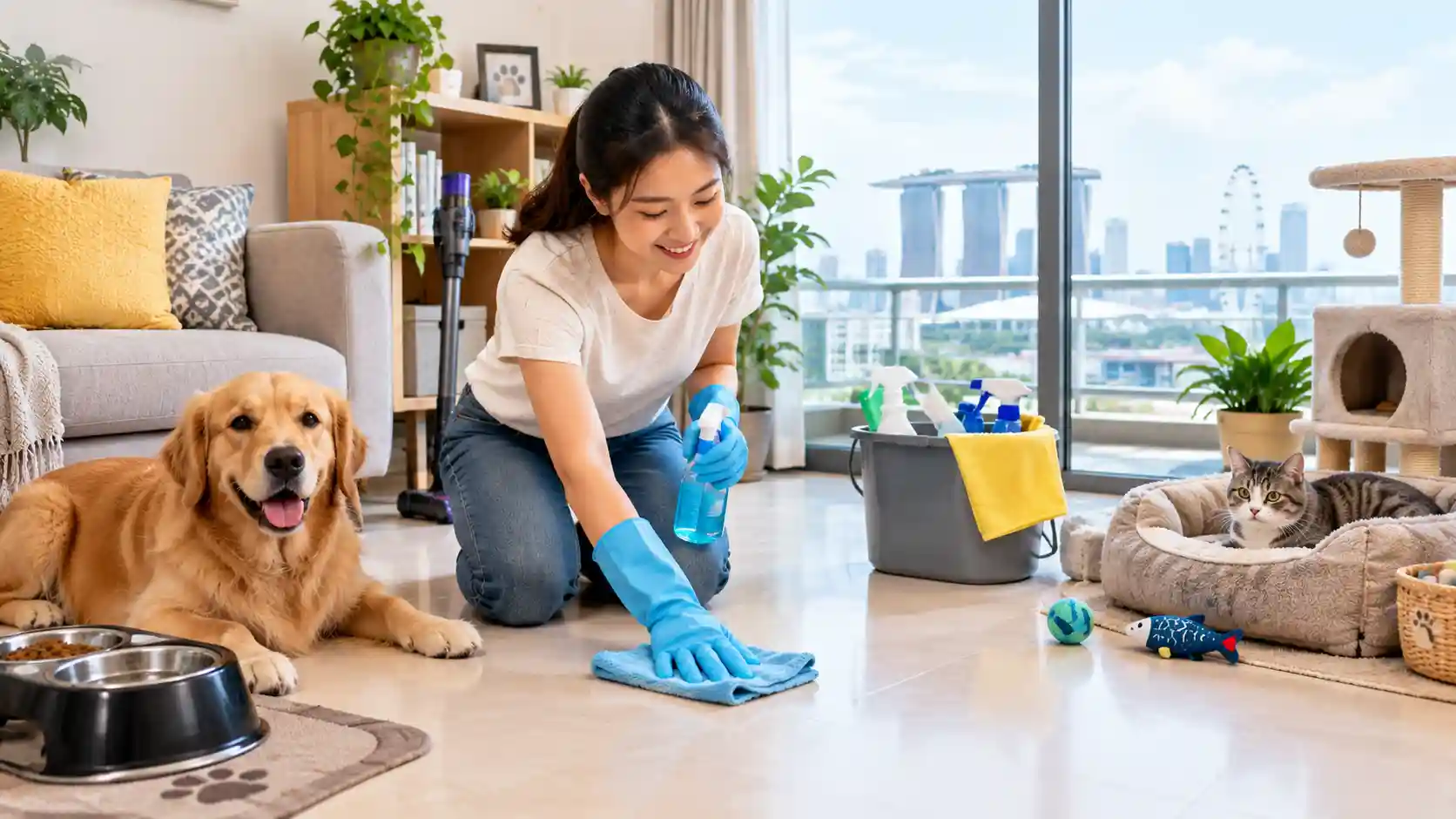
Living with pets in a Singapore HDB flat, condominium, or landed property brings immense warmth and companionship. Whether it is a dog welcoming you at the front door or a cat lounging on the sofa, pets make a house feel like a home.
However, maintaining a clean living environment with pets presents daily challenges. In Singapore’s warm, tropical climate, pet hair, dander, paw prints, and subtle odours accumulate quickly on floors, soft furnishings, corners, and other frequently used areas.
While routine sweeping and vacuuming help manage day-to-day mess, keeping up with household chores in a busy pet-friendly home requires time, effort, and consistency.
This guide shares practical, pet-friendly home cleaning tips tailored for Singapore households—helping you manage pet hair, reduce dander buildup, keep hard-to-reach areas tidy, and maintain a fresher living environment for your entire family.
Understanding Common Pet Cleanliness Challenges in Singapore Homes
Managing household cleanliness when you have pets involves more than simply picking up loose fur balls from the floor. Understanding where pet debris accumulates makes routine cleaning far more efficient.
Pet Hair and Shedding
Pet hair settles rapidly on soft furnishings, fabric sofas, carpets, and clothing. Because air circulation from ceiling fans and open windows keeps hair moving, fur frequently drifts under low furniture, along skirting boards, and into room corners.
Pet Dander and Allergens
Pet dander consists of microscopic flecks of skin shed by animals with fur or feathers. Because these particles are lightweight, they float in indoor air and settle onto curtains, fabric headboards, and air conditioner return vents. In sensitive individuals, accumulated pet allergens can contribute to mild allergic symptoms or respiratory discomfort. Regular dusting and vacuuming help reduce this buildup.
Humidity and Odour Control
Singapore’s humid climate can make pet odours more noticeable, especially when moisture, fur, and organic debris build up in fabrics and pet bedding. Keeping indoor spaces well-ventilated and regularly laundering fabric items helps keep your home smelling fresher.
Environmental Pest Awareness
Pets that spend time outdoors can occasionally bring flea eggs, dirt, or tiny pests indoors on their coats or paws. While routine house cleaning helps remove organic debris, dirt, and loose particles from carpets and floor crevices, it is important to note that cleaning alone is not a cure for pest issues.
If your pet or home is experiencing an active flea infestation, proper treatment requires veterinary-prescribed pest preventatives for your pets alongside professional pest control services for your living space. Regular house cleaning plays a supporting role by keeping the home tidy while treatments take effect.
Practical Pet-Friendly Cleaning Tips by Area
Taking a systematic, room-by-room approach ensures that pet hair and dander are regularly addressed before they build up.
+-----------------------------------------------------------------------+
|                    PET-FRIENDLY ROOM-BY-ROOM CHECKLIST                |
+-----------------------------------------------------------------------+
|  LIVING & DINING ROOM                                                 |
|  [ ] Vacuum fabric sofas using narrow attachments between cushions    |
|  [ ] Move light furniture to clean underneath pet resting spots       |
|  [ ] Wipe down skirting boards, TV consoles, and low window sills     |
|  [ ] Dust ceiling fan blades and wipe aircon return vents             |
|  [ ] Damp-mop floors with a suitable pet-safe floor cleaner           |
+-----------------------------------------------------------------------+
|  BEDROOMS                                                             |
|  [ ] Strip pet-exposed bed linens for washing according to care label |
|  [ ] Vacuum mattress surfaces, fabric headboards, and under bed frames|
|  [ ] Clean edge-to-edge along wardrobes where pet fur gathers         |
+-----------------------------------------------------------------------+
|  PET-DEDICATED ZONES                                                  |
|  [ ] Vacuum fabric pet beds, scratching posts, and play trees         |
|  [ ] Wipe down plastic crates, feeding mats, and litter tray surrounds|
|  [ ] Clean floor areas around feeding bowls to remove food spillages  |
+-----------------------------------------------------------------------+
1. Living Room & Common Areas
The living room is typically where pets spend most of their time, making it the primary hub for pet hair and dander.
Sofas and Upholstery: Use specialized fabric or crevice vacuum attachments to clean cushion folds and seams where loose fur and debris gather.
Under Furniture: Periodically move light coffee tables and chairs to vacuum underneath sleeping spots and low-clearance areas.
Overhead Surfaces: Dust ceiling fan blades, curtain tracks, and air conditioner vents regularly. This prevents accumulated dust and dander from blowing across the room when fans are turned on.
Hard Flooring: Sweep or vacuum tiled, vinyl, or parquet floors before mopping with a well-wrung microfiber mop.
2. Bedrooms & Sleeping Areas
If your pets are allowed on or near your bed, sleeping areas require regular attention to manage dust and hair.
Bedding Care: Wash pet-exposed bed sheets, duvet covers, and pillowcases regularly according to the manufacturer’s care instructions. Where fabric allows, a hot water wash can help remove accumulated allergens and dirt.
Mattresses & Headboards: Gently vacuum bare mattress surfaces and fabric headboards using soft brush attachments.
Under Bed Clearance: Vacuum under bed frames where dark, undisturbed conditions allow dust and fur to collect.
3. Dedicated Pet Zones (Feeding Areas, Litter Boxes & Pet Beds)
Dedicated pet zones require simple daily upkeep paired with thorough weekly cleaning.
Pet Bedding: Shake out fabric pet beds outdoors before vacuuming or tossing them into the wash.
Cat Trees & Scratching Posts: Use a vacuum brush or rubber squeegee to scrape away embedded fur from carpeted cat towers and sisal posts.
Feeding & Litter Areas: Sweep up scattered litter granules or dry kibble spills daily. Wipe down hard plastic mats and clean the surrounding floor areas with a suitable pet-safe household cleaner.
Safe Cleaning Habits for Pet-Friendly Homes
When selecting cleaning products and methods for a pet-friendly household, prioritizing safety and surface care is essential.
Choose Suitable Pet-Safe Cleaning Products
Pets spend a significant amount of time on floors and low furniture, often grooming their paws after walking on freshly cleaned surfaces.
Gentle Detergents: Opt for neutral, pet-safe floor cleaners or mild dish soaps diluted with warm water for general surface wiping.
Avoid Harsh Chemicals: Avoid using harsh, undiluted chemicals like concentrated bleach, heavy industrial degreasers, or strong pine-oil solutions on surfaces your pet frequents. These can leave irritating residues or produce strong fumes that bother sensitive animal noses.
Spot Test New Products: Before using a new cleaning solution on carpets, upholstery, or timber flooring, always test a small, hidden spot first to prevent discoloration.
Maintain Cleaning Equipment
Clean tools yield cleaner homes. Ensure your vacuum cleaner’s filter is regularly cleaned or replaced—preferably using a vacuum equipped with a sealed HEPA filter to catch fine dust particles. Empty vacuum canisters and clean mop heads after each session so odours are not redistributed during the next clean.
When Professional Cleaning Can Help
Balancing career demands, family commitments, and daily household chores while caring for pets can be exhausting. Pet hair and dander build up rapidly, turning routine weekend chores into hours of repetitive vacuuming and scrubbing.
For busy pet owners in Singapore, hiring a reliable part time cleaning service offers a practical solution.
Instead of spending precious weekends chasing fur balls and scrubbing floor grout, a professional helper can assist with essential recurring tasks—such as vacuuming soft furnishings, mopping hard floors, wiping skirting boards, and keeping pet areas fresh.
Delegating routine house cleaning allows you to maintain a tidy, comfortable home environment without sacrificing your free time, giving you more quality hours to enjoy with your pets.
Keeping a Pet-Friendly Home Fresh Long-Term
Cleaning frequency naturally varies depending on the number of pets you have, their shedding levels, your home size, and your family’s sensitivity to indoor allergens.
Rather than following rigid rules, adjust your cleaning routine based on lifestyle needs:
Daily: Sweep or vacuum high-traffic pet pathways, wipe spilt food or water, and scoop litter boxes.
Weekly: Vacuum upholstery and rugs thoroughly, mop floors, dust low surfaces, and wash pet bedding.
Monthly: Wipe down overhead fan blades, clean air conditioner filters, and move larger furniture pieces to clean hidden spaces.
A pet-friendly home does not have to mean a messy home. With a consistent cleaning routine, safe products, and periodic assistance when needed, you can enjoy a fresh, welcoming living space alongside your furry family members.
If you need help keeping up with routine household chores, Singapore Cleaning Service provides dependable home cleaning solutions for busy households in Singapore. Contact us today to learn how our experienced cleaners can help keep your home fresh and tidy.
Frequently Asked Questions
How often should I vacuum a home with pets?
The ideal frequency depends on shedding levels, the number of pets, and how often pets use shared spaces. High-traffic areas may need more frequent vacuuming than quieter rooms.
How can I reduce pet hair on sofas?
Regular vacuuming with an upholstery attachment can help remove loose fur from cushion seams and fabric surfaces. Washing removable covers according to their care instructions can also help maintain freshness.
Are professional cleaners suitable for pet-friendly homes?
Yes, provided the cleaning tasks, pet areas, and any product preferences are clearly communicated in advance. Pet owners should also secure their pets during cleaning for the safety and comfort of both the animals and cleaners.
How can I keep pet bedding smelling fresh?
Regular washing according to the manufacturer’s care instructions, combined with routine vacuuming of surrounding areas, can help reduce accumulated fur, dirt, and odours.
