
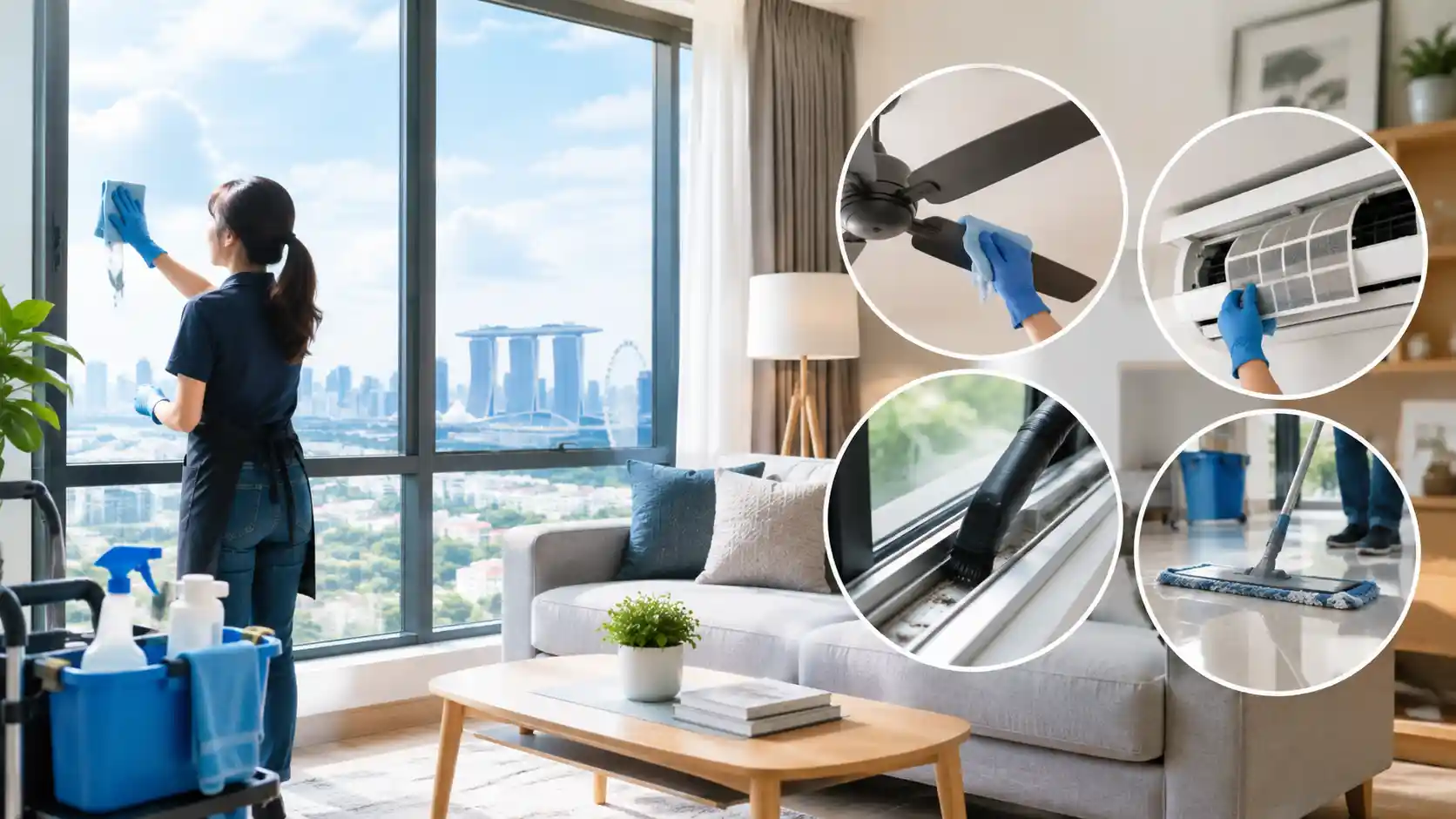
Transboundary haze is a recurring seasonal occurrence for residents in Singapore. When Pollutant Standards Index (PSI) levels rise, fine ash, airborne soot, and micro-particles drift across the region. While keeping doors and windows shut helps limit exposure during an episode, fine dust and airborne residue still find their way onto interior surfaces, window ledges, ceiling fans, and hard flooring.
Once outdoor air quality improves and the sky clears, many homeowners may notice a grey film on window tracks, dusty cabinet tops, and grittiness underfoot. A systematic cleaning approach helps remove this accumulated dust without simply scattering it back into the room.
Whether you live in an HDB flat or a private condominium, this guide provides a practical, step-by-step approach to preparing your apartment before the haze, containing dust during an episode, and executing a thorough post-haze home cleanup.
Part 1: Before and During the Haze: Preparing Your Home
Taking simple protective measures before and during a haze spell reduces the amount of dust that settles inside your home, making post-haze cleaning significantly faster and easier.
1. Inspect and Secure Perimeter Seals
The main entry points for airborne dust are window tracks, sliding doors, service yards, and main entrance doors.
Check Window Rubber Strips: In Singapore’s warm and humid environment, rubber seals around aluminum window frames can degrade or harden over time. Inspect window tracks for visible gaps.
Close Yard and Toilet Louvers: HDB service yards, toilet louver windows, and kitchen ventilation openings are common entryways for outdoor dust. Keep these louvers tightly closed when PSI levels rise.
Block Door Drafts: Draft excluders or rubber door snakes along main entry doors facing common lift lobbies help block dust drifting through open corridors.
2. Basic Air Conditioning & Air Purifier Prep
Keeping your cooling systems clean ensures they operate efficiently when windows remain closed.
Rinse Aircon Mesh Filters: Remove and clean the washable plastic mesh filters from your split-unit air conditioner according to the manufacturer’s instructions.
Check Air Purifier Pre-Filters: Vacuum or rinse the washable outer pre-filter on your stand-alone air purifier so the unit can run smoothly.
3. Dust Containment During Elevated PSI Days
When local authorities report elevated 24-hour PSI readings, the focus shifts to minimizing indoor dust generation:
Avoid Dry Sweeping: Refrain from using traditional dry brooms or feather dusters during an active haze spell, as they can disturb settled dust and cause it to become airborne again.
Keep Doors and Windows Closed: Keep doors and windows closed as much as practical during periods of poor outdoor air quality to minimize airborne dust entering living areas.
Part 2: Step-by-Step Post-Haze Home Cleaning
Once outdoor air quality improves and PSI levels return to a lower range, fine soot and dust remain settled across your living space. Cleaning your home in a logical, top-to-bottom sequence prevents you from dirtying areas you have already cleaned.
                  POST-HAZE CLEANING SEQUENCE

       [Step 1] Clean Outer Window Ledges & Window Tracks
                              │
                              ▼
       [Step 2] Clean High Fixtures, Ceiling Fans & Doors
                              │
                              ▼
       [Step 3] Wipe Cabinet Exteriors & Hard Surfaces
                              │
                              ▼
       [Step 4] Vacuum & Damp-Mop Hard Flooring (Two-Bucket)
                              │
                              ▼
       [Step 5] Reset Air Conditioner & Purifier Exteriors
Step 1: Clean Outer Window Ledges and Window Tracks
Start at the perimeter where airborne dust first enters the home. Window tracks, sliding door rails, and balcony ledges can collect noticeable amounts of dark grime during haze periods.
Safety First: Always prioritize safety. Never lean out of high-rise windows or stand precariously on ledges. Use extendable dusters or telescopic handles where necessary.
Vacuum Dry Loose Dust: Use a vacuum cleaner with a crevice nozzle attachment to pick up dry, loose dirt from window tracks before applying any liquid.
Wipe Tracks Down: Apply a small amount of diluted mild cleaner to a cloth rather than soaking the window track. Wipe thoroughly to lift stubborn grime.
Step 2: Clean High Fixtures, Ceiling Fans, and Doors
Fine airborne dust settles heavily on elevated flat surfaces that are easily overlooked during basic daily chores.
Ceiling Fan Blades: Dust accumulates rapidly along the top edges of ceiling fan blades. Wrap a slightly damp microfiber cloth around the top and bottom of each blade, pulling from the center outward to catch the dust within the cloth rather than letting it fall to the floor.
Door Frames and Aircon Casing Tops: Wipe along the top edges of interior doors, main door frames, and the upper ledges of indoor aircon wall units using a damp cloth.
Light Fixtures & Switches: Wipe reachable hanging light shades and high-touch areas around light switches where dark dust smudges often accumulate.
Step 3: Wipe Down Cabinet Exteriors, Tables, and Countertops
Work your way down to mid-level hard surfaces throughout the living room, bedrooms, and kitchen.
Hard Furniture & Electronics: Wipe down TV consoles, coffee tables, dining tables, and shelving units with a damp microfiber cloth. A slightly damp microfiber cloth can help capture fine dust rather than simply pushing it across the surface.
Kitchen & Wardrobe Cabinet Doors: Fine soot can leave a thin, sticky film on kitchen laminates and wardrobe doors. Wipe down cabinet fronts using a soft cloth dampened with a gentle multi-purpose household cleaner.
Step 4: Vacuum and Damp-Mop Hard Flooring
Floors should always be cleaned last so that any dust wiped down from ceiling fans, light fixtures, and tables is completely removed.
Vacuuming Before Mopping: Vacuuming is generally preferable to dry sweeping when dealing with fine post-haze dust on hard flooring (tiles, vinyl, or parquet) to collect loose grit before introducing moisture. Brooms tend to push fine particles around rather than lifting them.
The Two-Bucket Mopping System:
Bucket A: Warm water mixed with a neutral pH floor cleaner.
Bucket B: Clean rinse water.
Mopping Technique: Dip the mop into the cleaning solution (Bucket A), mop a section of the room, wring it out into the rinse water (Bucket B), and wring it again before dipping back into Bucket A. This keeps your wash water clean and prevents dragging dirty water across your floor tiles or parquet.
Step 5: Wipe Down Air Purifiers and AC Exteriors
Finish by wiping down the external casings and louvers of your air purifiers and air conditioning units. If heavy dust accumulated during the haze spell, check and clean the washable aircon mesh filters again according to the manufacturer’s instructions.
Post-Haze Surface Cleaning Summary
The table below outlines the recommended approach for cleaning different hard surfaces in your home after a haze episode:
| Surface / Area | Primary Cleaning Method | Recommended Cleaning Tool | Key Precaution |
| Window Tracks & Sliding Rails | Vacuum dry dirt first, then wipe with damp cloth | Crevice nozzle & damp microfiber cloth | Avoid flushing indoor tracks with heavy water |
| Ceiling Fan Blades | Encase blade with damp cloth and pull outward | Damp microfiber duster/cloth | Clean before doing floor cleaning |
| Laminate Cabinets & Doors | Wipe top-to-bottom with diluted cleaner | Soft microfiber cloth | Avoid overly soaking wood/laminate joints |
| Hard Tile / Parquet Flooring | Thorough vacuuming followed by two-bucket mopping | Vacuum cleaner & microfiber mop | Change rinse water frequently |
| Aircon External Louvers | Wipe outer plastic casing and directional vanes | Damp cloth | Ensure aircon power is turned off before wiping |
Essential Cleaning Supplies for Post-Haze Reset
Having the right tools simplifies the cleaning process and keeps fine dust contained:
Microfiber Cloths: Microfiber features split synthetic fibers that hold onto fine dust when slightly dampened, helping to capture fine particles efficiently.
Vacuum Cleaner: A vacuum cleaner with good filtration helps trap collected dust inside the dust bin without blowing fine particles out through the exhaust.
Neutral Multi-Purpose Surface Cleaner: A gentle, non-abrasive household cleaner suitable for wiping laminate wardrobes, kitchen countertops, and painted door frames.
Two Buckets & Microfiber Mop: Crucial for keeping rinse water separate from clean floor-cleaning solution when mopping post-haze grit off tiles and vinyl floors.
When to Seek Professional House Cleaning Support
Restoring a home after a prolonged haze spell can be time-consuming, especially for busy households balancing work and family commitments.
Engaging professional house cleaning services in Singapore can help clear accumulated household dust efficiently. Experienced domestic cleaners have the systematic routines and tools required to wipe down high fixtures, clear dusty window tracks, and thoroughly mop hard flooring top-to-bottom.
For households preparing for a major seasonal reset or recovering from extended travel during a hazy period, booking a comprehensive spring cleaning service provides a thorough cleaning session to tackle built-up dust across all accessible surfaces, cabinet exteriors, and hard floors.
Maintaining a Clean Home Environment Year-Round
Beyond seasonal haze events, keeping a consistent cleaning routine helps maintain low indoor dust levels in Singapore’s tropical environment:
Establish a Regular Weekly Routine: Regular vacuuming and damp-mopping prevent everyday dust from building up on hard floors and skirting boards.
Keep High Surfaces Part of the Routine: Periodically wiping door frames, wardrobe tops, and ceiling fans prevents thick dust layers from forming.
Maintain Good Ventilation: When outdoor air quality is good, open windows to promote cross-ventilation and keep indoor spaces fresh.
Frequently Asked Questions (FAQs)
1. How soon should I clean my apartment after the haze clears?
Once outdoor air quality has improved and PSI levels remain stably in a lower range for a few hours, open windows partially if appropriate to refresh indoor air, then begin your top-to-bottom cleanup starting with window ledges and tracks.
2. Is it better to sweep or vacuum post-haze floor dust?
Vacuuming is generally preferable to dry sweeping when dealing with fine post-haze dust. Brooms often push fine particulate matter into the air, allowing it to resettle on tables and shelves. Vacuuming helps collect loose dust from tiles, vinyl, and wood floors.
3. How do I remove dark grey soot smudges from light-coloured painted walls?
Do not scrub painted walls vigorously with abrasive sponges. Instead, dampen a soft microfiber cloth with warm water and a tiny drop of mild dish soap or neutral cleaner. Gently wipe the smudge using light, circular motions, then pat dry with a clean towel.
4. Should I wipe down internal cabinet shelves after a haze episode?
If your cabinets remained closed during the haze, their internal shelves may need less attention. However, if they were left open or you notice dust or grit, wipe the shelves with a slightly damp microfiber cloth.
Summary Checklist: Post-Haze House Cleaning
BEFORE & DURING THE HAZE:
[ ] Close all windows, balcony doors, service yards, and louver vents
[ ] Check and clean aircon plastic mesh filters according to manufacturer guidelines
[ ] Use damp cloths for any light touch-ups (avoid dry sweeping)

POST-HAZE CLEANUP:
[ ] Wipe outer window ledges and vacuum dirt out of sliding tracks
[ ] Wipe elevated surfaces (ceiling fan blades, door frames, light fixtures)
[ ] Wipe mid-level hard furniture, dining tables, and cabinet fronts
[ ] Vacuum all hard flooring (tiles, vinyl, parquet)
[ ] Damp-mop floors using a two-bucket rinse system
[ ] Wipe external casings of air conditioners and air purifiers