
Drain problems are common in Singapore homes, especially in households where daily and weekly house cleaning habits are inconsistent. Slow drains, bad smells, and water backups often build up quietly as part of everyday household mess. Grease from cooking, soap residue from bathrooms, and hair from daily use gradually accumulate when cleaning routines are skipped or rushed.
In most cases, drain clogs are not sudden plumbing failures. They are the result of neglected kitchen and bathroom cleaning habits over time. Regular house cleaning plays a key role in preventing these issues before they turn into serious blockages.
If you are looking for practical drain cleaning and unclogging tips in Singapore, the best approach starts with regular cleaning habits. Many drain problems develop slowly. They are often ignored until water stops flowing properly. By understanding why drains clog and how to clean them correctly, you can prevent most issues before they become serious.
This guide focuses on cleaning-based solutions that are suitable for HDB flats, condominiums, and landed homes in Singapore. The goal is to help you keep drains clear using safe, realistic, and easy methods.
Many households find that consistent house cleaning services Singapore homes rely on help reduce grease buildup and drain-related issues over time.
Why Drains Get Clogged Easily in Singapore Homes
Singapore’s climate plays a big role in drain problems. Warm temperatures and high humidity speed up the buildup of grease, soap scum, and organic waste. Water is used many times a day in kitchens and bathrooms, which pushes small debris into pipes.
In many homes, drain issues appear more frequently when kitchen and bathroom cleaning is done only on the surface. While sinks and floors may look clean, hidden areas such as drain openings, floor traps, and strainers are often overlooked during regular house cleaning.
In HDB flats and condominiums, drainage systems are shared across units. This means small issues can build up faster. A slow drain today can become a blockage later if it is not cleaned properly.
Household moisture and hygiene issues that affect drains are also commonly discussed in guides about how to get rid of indoor ants in Singapore homes.
Understanding these conditions helps explain why drain cleaning needs to be done regularly, not only when problems appear.
Common Drain Problems Found in Singapore Homes
Drain issues usually start small. They often give warning signs before turning into major clogs.
Kitchen Sink Drain Issues
Kitchen sinks are one of the most common problem areas, especially in households where post-cooking cleaning is rushed or skipped. Grease, oil, and food scraps build up faster when sinks are not wiped and strainers are not cleaned as part of regular kitchen cleaning.
Over time, grease sticks to the pipe walls. Food particles get trapped in the sticky layer. Water flow slows down gradually. This often leads to bad smells and standing water.
Regular kitchen maintenance, similar to routines used in weekly house cleaning service schedules, helps prevent grease and food residue from blocking sink drains.
Bathroom Sink and Shower Drains
Bathroom drains clog more often in homes where hair and soap residue are not removed during routine bathroom cleaning. While surfaces may be wiped, drains are often ignored until water flow slows.
Shower drains often clog slowly. Water may still drain, but much more slowly than before. This is an early sign that cleaning is needed.
Floor Traps and Balcony Drains
Floor traps are common in bathrooms, kitchens, and balconies. These drains collect dirt, dust, hair, and small objects. Balcony drains may also collect leaves and outdoor debris.
During heavy rain, blocked balcony drains can cause water to pool. This creates safety risks and water damage if ignored.
9 House Cleaning Habits That Prevent Drain Clogging in Singapore Homes
The following tips focus on cleaning habits that help keep drains clear. They are simple, safe, and suitable for everyday use in Singapore homes.
Tip 1: Remove Grease Before Washing Dishes
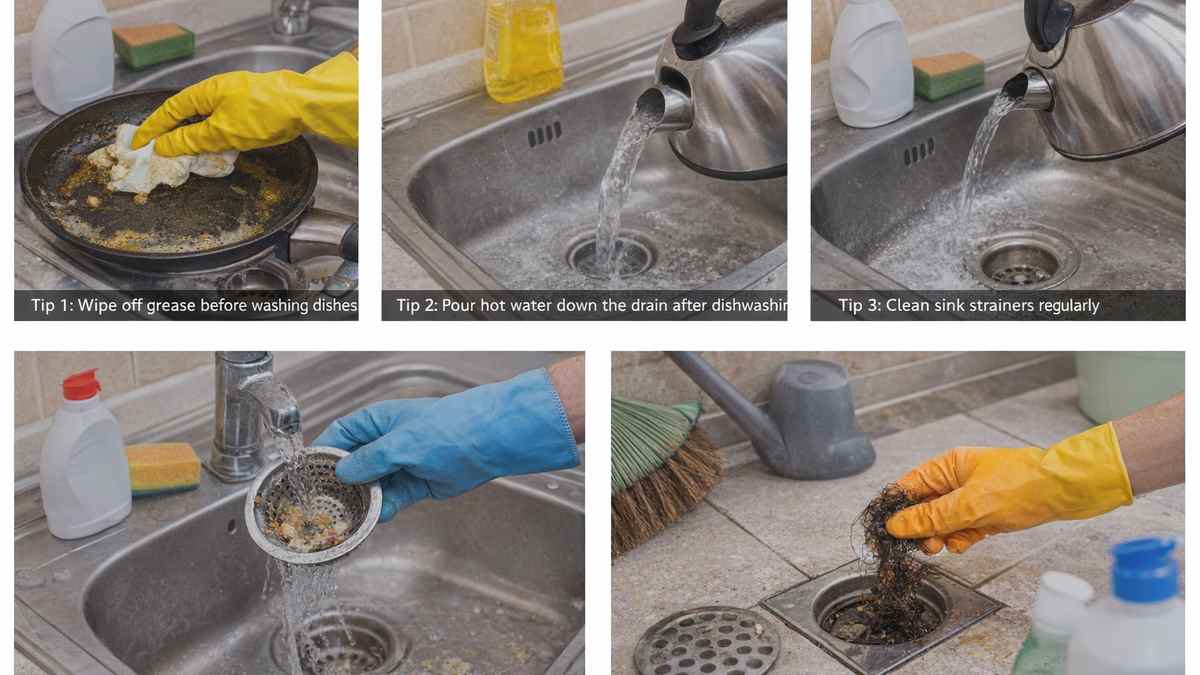
Grease is one of the biggest causes of clogged kitchen drains. Before washing dishes, wipe oily pans and plates with paper towels. Dispose of the grease in the bin instead of washing it away.
This small habit reduces grease buildup inside pipes and keeps water flowing smoothly.
Tip 2: Use Hot Water Correctly
Hot water helps loosen grease and soap residue. After washing dishes, run hot water for a short time. This helps push softened residue further down the pipes.
Do not rely on hot water alone. It works best as a support method combined with proper cleaning habits.
Tip 3: Clean Sink Strainers Regularly
Sink strainers catch food scraps and debris. However, they only work if they are cleaned often. Remove the strainer and rinse it after heavy cooking sessions.
Food trapped in strainers can rot and cause bad smells. Keeping strainers clean prevents debris from entering the drain.
Tip 4: Remove Hair Buildup Safely
Hair is the main cause of bathroom drain clogs. Check shower and sink drains regularly. Remove visible hair using gloves or simple tools.
Do this before water starts draining slowly. Early removal prevents deeper blockages that are harder to clean.
Tip 5: Avoid Pouring Oil Down Drains
Oil should never be poured into drains. Even small amounts can cause buildup over time. Collect used cooking oil in containers and dispose of it properly.
This habit is especially important in Singapore homes where cooking is frequent.
Tip 6: Clean Floor Traps Monthly
Floor traps collect hidden debris. Remove the cover and clean inside the trap at least once a month. Use gloves and rinse thoroughly.
Regular floor trap cleaning helps prevent slow drains and bad odours.
Tip 7: Use Mild Cleaning Solutions Wisely
Mild solutions such as dish soap can help break down grease. Use them occasionally with warm water. Avoid harsh chemicals that may damage pipes or cause safety issues.
Gentle cleaning works better when done regularly rather than as a last-minute fix.
Tip 8: Keep Balcony Drains Clear
Balcony drains are often forgotten. Check them after storms or windy days. Remove leaves, dirt, and debris.
Clear balcony drains help prevent water buildup and drainage problems during heavy rain.
Tip 9: Maintain Weekly Cleaning Habits
Consistency is the most important factor. Weekly cleaning routines reduce buildup in all drains. This includes wiping sinks, cleaning strainers, and checking floor traps.
Homes that maintain weekly cleaning habits experience fewer drain issues over time.
In most Singapore households, drain problems are less common when regular house cleaning is done consistently. Weekly kitchen and bathroom cleaning routines naturally remove grease, soap residue, and debris before they reach the pipes. When drains are checked as part of normal cleaning, clogs rarely develop suddenly.
Simple Home Methods That Support Drain Cleaning
Home methods can help support cleaning routines. They should not replace regular maintenance.
Hot water and dish soap can help loosen grease. Baking soda and vinegar may help reduce minor residue. Use these methods sparingly and safely.
Never mix different cleaning chemicals. Mixing products can create harmful reactions and damage pipes.
What NOT to Do When Drains Are Clogged
Some actions can make drain problems worse.
Avoid using harsh chemical cleaners repeatedly. These can damage pipes and may not remove the real cause of clogs.
Do not force objects into drains. This can push debris deeper and cause blockages.
Avoid ignoring slow drains. Slow drainage is an early warning sign. Cleaning early prevents bigger problems.
How to Prevent Drain Clogs Long Term
Long-term prevention is about habits. Simple changes make a big difference.
Wipe grease before washing dishes. Use strainers in sinks. Remove hair from drains regularly. Clean floor traps monthly. Keep balcony drains clear.
Fix small leaks early. Standing water attracts debris and increases buildup. Consistent habits reduce the need for emergency fixes.
Homes that follow structured routines often supported by part time cleaning service arrangements tend to experience fewer recurring drain problems.
When Drain Cleaning Is Not Enough
Sometimes cleaning alone does not solve the problem. Repeated infestations may point to hidden nests or structural issues.
If drains remain slow despite regular cleaning, there may be deeper moisture problems or external sources. In such cases, further assessment may be needed. Cleaning still remains the foundation.
Common Drain Cleaning Mistakes in Singapore Homes
Many households make similar mistakes. These mistakes delay proper cleaning.
Rinsing sinks without removing grease is a common error. Assuming slow drains are normal is another mistake. Ignoring floor traps is also common.
Correcting these habits improves drainage and reduces long-term problems.
FAQs About Drain Cleaning and Unclogging
Why do drains clog so often in Singapore homes?
High humidity, frequent water use, and daily cooking contribute to faster buildup in drains.
Are slow drains a serious problem?
Slow drains are an early warning sign. Cleaning early prevents complete blockages.
Can home methods fully unclog drains?
Home methods help with minor issues. Regular cleaning works best for prevention.
Are clogged drains common in HDB flats?
Yes. Shared drainage systems and compact designs make clogs common in HDB flats.
Useful Topics To Read:
- 9 Carpet Cleaning Tips to Prevent Dust and Odours in Singapore Homes
- Top 10 Professional Ironing Service Tips for Singapore Homes
- Top 10 Professional House Cleaning Detergents Used in Singapore Homes
- Why Your Home’s Cleanliness Matters After Pipe Leaks
- Top 10 Spring Cleaning Service Tips For Singapore Residents
- 11 Kitchen Degreasing Tips for Busy Singapore Households
- How to Get Rid of Sticker Residue: Safe Methods for Every Surface
- How a Clean Home Can Boost Your Mental Wellbeing and Productivity
- Top 5 Hiring Part-Time Cleaner Benefits in Singapore
- How to Maintain a Clean and Healthy Home with Kids and Pets
- Top 10 Cleaning Company in Singapore | A Comprehensive Guide
- Waste Collection Singapore: How Managing Household Waste Keeps the City Clean
- Pest Control: How to Keep Your Home Pest-Free During Monsoon Season in Singapore
- How Far in Advance Should I Book a Cleaning Service Appointment?
- Top 7 Post Tenancy Cleaning Benefits for Singapore Residents
- Simplify Your Life with a Weekly Cleaning Routine
- One-Time House Cleaning Service | Sparkling Home Solutions
- Top 6 Essential CNY Cleaning Tips Singapore
- Top 10 End of Tenancy Cleaning Do’s and Don’ts (Singapore Guide)
- The Ultimate Guide to Post Renovation Cleaning in Singapore
- Air Fresheners: A Comprehensive Guide to Freshening Up Your Space
- House Cleaning vs Other Cleaning Services in Singapore
- Top 10 House Cleaning Singapore Smart Tips for Everyday Home Care
- 10 Aircon Cleaning Mistakes That Cause Dust at Home
- Christmas Cleaning Tips for a Fresh and Stress-Free Home