
Unpleasant sewage smells in bathrooms and homes are a common concern in Singapore. These odours can appear suddenly or linger for days. They often come and go, which makes the problem confusing. Many homeowners assume the cause is serious plumbing trouble. In most homes, these odours develop gradually when regular bathroom and house cleaning routines miss hidden, moisture-prone areas.
Singapore’s warm climate and high humidity make odour issues more noticeable. Moist air traps smells. Compact living spaces also allow odours to travel easily from one area to another. Bathrooms, kitchens, and utility zones are the most affected areas. When cleaning routines miss certain spots, smells can build up quietly.
This guide explains bathroom and house sewage odor issues in Singapore homes. It focuses on common causes, cleaning-related factors, and prevention habits. The goal is to help you understand why these smells occur and how everyday hygiene practices can reduce them.
Many households notice fewer recurring odour problems when regular hygiene routines are supported by reliable house cleaning services in Singapore.
Why Sewage Odors Are Common in Singapore Homes
Several local factors contribute to sewage odours in Singapore homes. High humidity is one of the main reasons. Moisture stays longer on surfaces and inside enclosed spaces. This creates conditions where residue and stagnant water can smell stronger.
Frequent water use also plays a role. Bathrooms are used many times a day. Kitchens see regular cooking and washing. Floor traps and drains constantly receive water and residue. Over time, small amounts of waste can create noticeable smells.
In HDB flats and condominiums, drainage systems are shared across units. Odours can move through common pipes and air spaces. Compact layouts and limited ventilation can make smells linger longer indoors.
Common Bathroom Sewage Odor Issues
Bathrooms are the most common source of sewage-like smells. Water, warmth, and daily use combine to create odour-prone conditions.
Floor Traps and Drain Covers
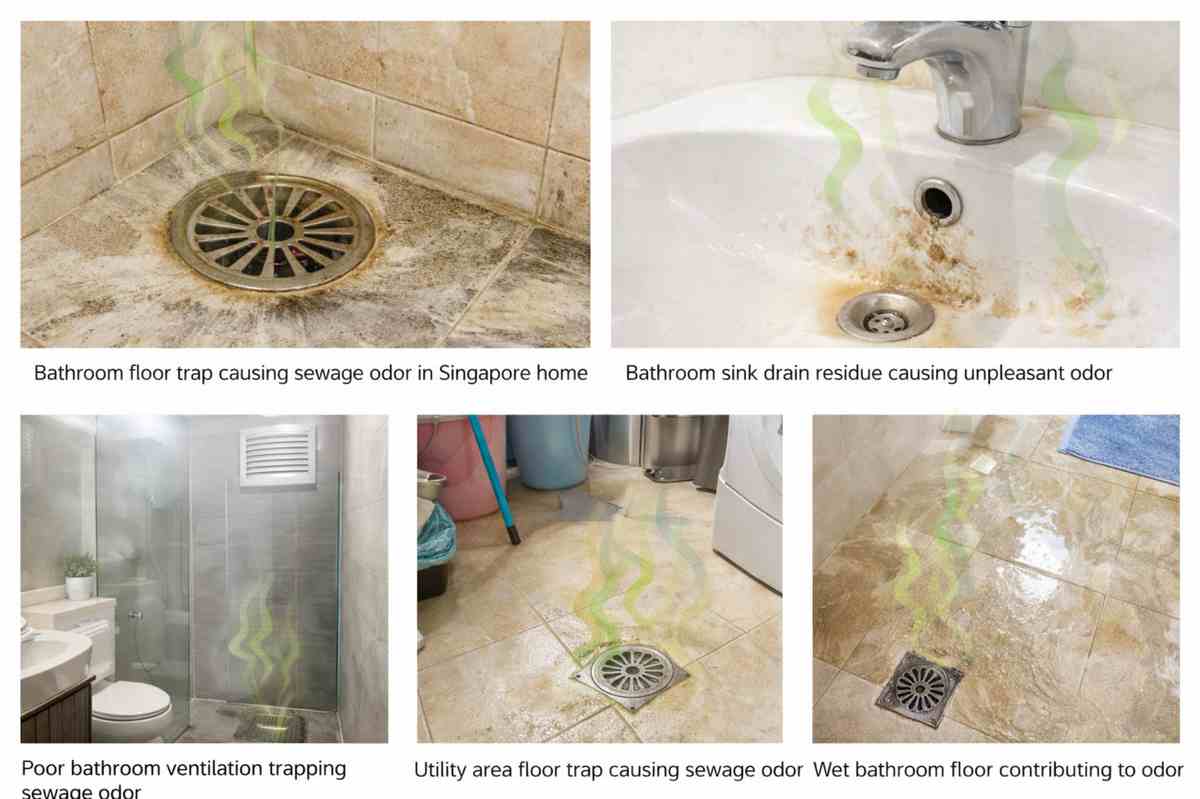
Floor traps are designed to hold water. This water blocks gases from coming up. When traps are not cleaned regularly, residue can collect inside. Hair, soap, and dirt settle in the trap.
If a floor trap dries out, the water seal can break. This allows odours to rise. This can happen in guest bathrooms or rarely used toilets. Even without a broken seal, dirty traps can smell unpleasant.
Bathroom Sinks and Basins
Bathroom sinks collect toothpaste, soap, and skincare residue. These materials may not clog the sink but can still create smells. Residue sticks to surfaces inside the drain opening.
Over time, this buildup can produce a sour or sewage-like smell. The smell may appear stronger after water is used. This is often mistaken for pipe damage, but hygiene is usually the cause.
Shower Areas and Wet Floors
Showers keep bathroom floors wet for long periods. Moisture can become trapped under mats or around corners. Soap residue mixes with moisture and creates odours.
It is important to distinguish between sewage smells and mildew smells. Mildew smells are musty and damp. Sewage smells are heavier and unpleasant. Both are influenced by moisture, but the causes differ.
House-Wide Sewage Odor Sources
Sometimes sewage smells are not limited to bathrooms. They can spread to other areas of the home.
Kitchen Areas and Utility Zones
Kitchen areas may produce smells that resemble sewage. Grease residue, food waste, and damp surfaces can combine to create strong odours. These smells may be mistaken for sewer problems.
Utility zones, such as service yards, can also contribute. Wet mops, dirty pails, and floor traps in these areas often go unnoticed. When residue builds up, odours can travel indoors.
Floor Traps in Common Areas
Some homes have floor traps in common spaces or secondary toilets. These areas may be cleaned less often. When water dries out or residue accumulates, smells can surface.
Because these traps are not used daily, odours may appear suddenly. This makes the source difficult to identify.
Poor Ventilation and Trapped Moisture
Ventilation affects how smells behave indoors. Poor airflow allows odours to linger. Moist air traps smells and spreads them across rooms.
Bathrooms without windows or with weak ventilation fans are more likely to retain sewage-like odours. Moisture stays longer on surfaces and inside drains.
House Cleaning Habits That Contribute to Sewage Odors
Some cleaning habits unintentionally allow odours to develop. These habits are common and easy to overlook.
One habit is cleaning visible surfaces only. Floors and counters may look clean, but drains and traps are ignored. Odours often come from hidden areas, not visible dirt.
Another habit is using water alone. Water rinses surfaces but does not remove residue. Soap and grease require proper cleaning to break them down.
Ignoring early smells is another issue. Mild odours are often dismissed. Over time, these smells become stronger and harder to manage.
Cleaning-Based Ways to Reduce Sewage Odors
Reducing sewage odours starts with consistent hygiene practices. The focus should be on areas that collect residue and moisture.
Regular cleaning of bathroom floors and traps helps remove hidden buildup. Cleaning sink openings and drain covers reduces residue that causes smells.
Moisture control is also important. Drying bathroom floors and improving airflow can reduce odour formation. Simple habits, such as opening windows or using ventilation fans, make a difference.
Using mild cleaning products regularly is more effective than strong products used occasionally. Gentle cleaning prevents residue from becoming a problem. These practices are typically part of proper bathroom and house cleaning routines, not specialised repairs.
Deep hygiene routines are especially important during handovers, which is why thorough cleaning is often emphasised in end of tenancy cleaning service checklists.
What Sewage Odors Are NOT
Not all bad smells are sewage odours. Understanding the difference helps avoid confusion.
Food waste smells are often sharp or sour. They usually come from bins or kitchen areas. Mildew smells are damp and musty. They are linked to mould and moisture.
Sewage odours are heavier and unpleasant. They may intensify after water use. Knowing these differences helps identify the right cleaning focus.
How to Prevent Sewage Odors Long Term
Long-term prevention depends on habits rather than quick fixes. Small actions done consistently are more effective.
Clean floor traps regularly, even in rarely used areas. Keep bathroom sinks and drain covers clean. Manage moisture by drying wet areas and improving airflow.
Pay attention to early smells. Address them before they become strong. Routine hygiene prevents most odour issues from developing.
Maintaining good hygiene from the first day of occupancy, similar to practices recommended for move in cleaning service, helps prevent hidden odour problems from developing later.
When Cleaning May Not Be Enough
In some cases, cleaning alone may not fully resolve sewage odours. Persistent smells may indicate deeper issues. These can include dried traps, structural problems, or shared drainage effects.
This does not mean cleaning is unnecessary. Cleaning remains the foundation. When odours persist despite good hygiene, further assessment may be required.
Common Mistakes That Make Sewage Odors Worse
Some actions can make odours stronger. Masking smells with fragrances hides the problem without removing it. Overusing strong scents can make rooms uncomfortable.
Ignoring rarely used bathrooms is another mistake. These areas are often the source of unexpected odours. Assuming smells will disappear on their own also delays proper action.
Addressing the cause rather than covering the smell leads to better results.
FAQs About Bathroom and House Sewage Odor Issues
Why does my bathroom smell like sewage sometimes?
Bathrooms collect moisture and residue. Floor traps, sinks, and poor ventilation are common causes of sewage-like smells.
Are sewage odors common in HDB flats?
Yes. Shared drainage systems, compact layouts, and humidity make odours more noticeable in many HDB flats.
Can cleaning really reduce sewage smells?
Yes. Consistent cleaning and moisture control reduce residue that causes odours. Hygiene plays a key role.
How can I tell sewage odor from other bad smells?
Sewage odours are heavy and unpleasant. They often worsen after water use. Food and mildew smells have different characteristics.
More House Cleaning Articles To Read:
- How to Get Rid of Indoor Ants in Singapore Homes
- Drain Cleaning and Unclogging Tips for Singapore Homes
- How to Maintain a Clean and Healthy Home with Kids and Pets
- How to Get Rid of Sticker Residue: Safe Methods for Every Surface
- Air Fresheners: A Comprehensive Guide to Freshening Up Your Space
- 9 Carpet Cleaning Tips to Prevent Dust and Odours in Singapore Homes
- Top 10 Cleaning Company in Singapore | A Comprehensive Guide
- Waste Collection Singapore: How Managing Household Waste Keeps the City Clean
- Pest Control: How to Keep Your Home Pest-Free During Monsoon Season in Singapore
- How Far in Advance Should I Book a Cleaning Service Appointment?
- Top 7 Post Tenancy Cleaning Benefits for Singapore Residents
- Simplify Your Life with a Weekly Cleaning Routine
- One-Time House Cleaning Service | Sparkling Home Solutions
- Top 6 Essential CNY Cleaning Tips Singapore
- Top 10 End of Tenancy Cleaning Do’s and Don’ts (Singapore Guide)
- The Ultimate Guide to Post Renovation Cleaning in Singapore
- House Cleaning vs Other Cleaning Services in Singapore
- Top 10 House Cleaning Singapore Smart Tips for Everyday Home Care
- 10 Aircon Cleaning Mistakes That Cause Dust at Home
- Christmas Cleaning Tips for a Fresh and Stress-Free Home
- Why Your Home’s Cleanliness Matters After Pipe Leaks