
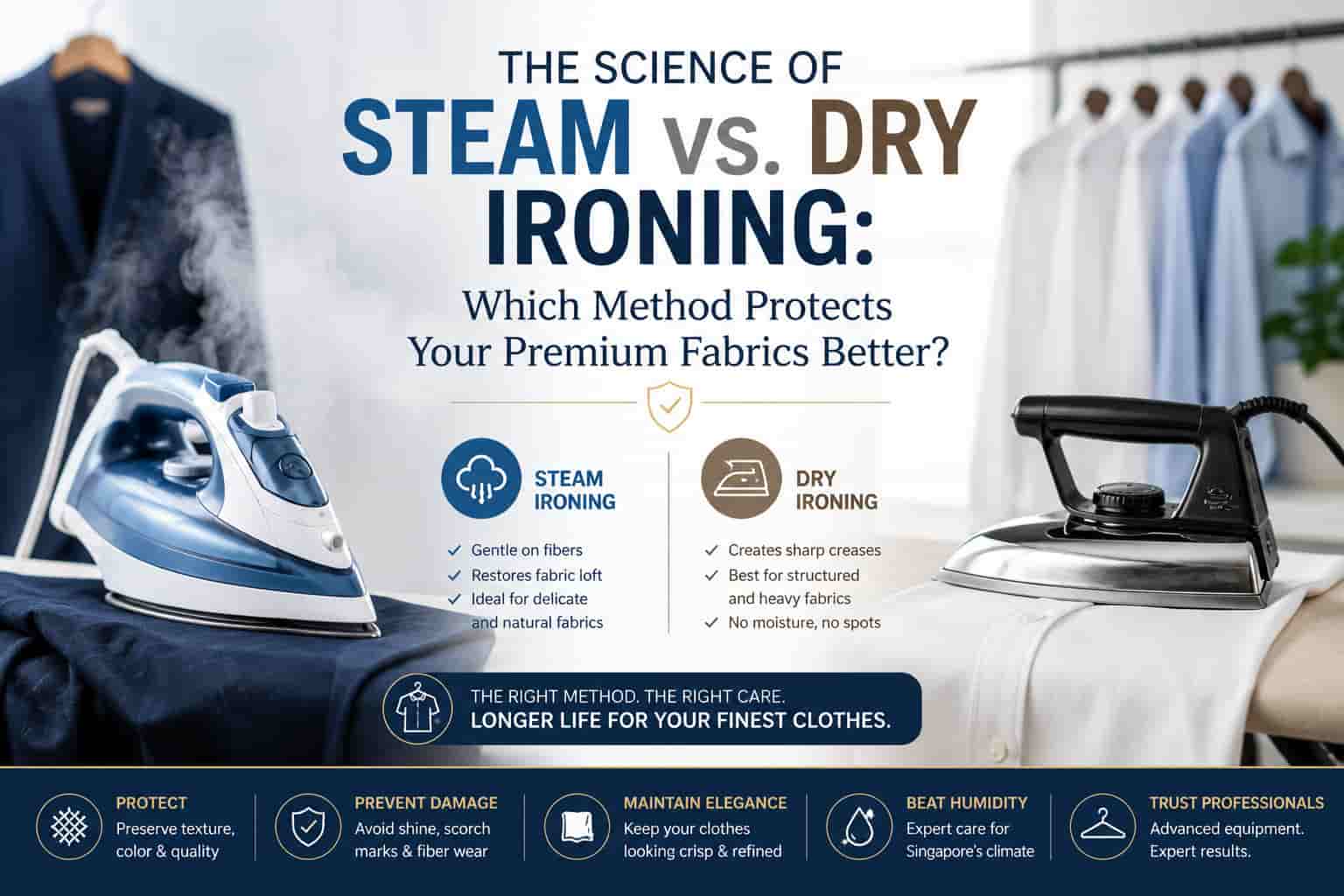
Every premium wardrobe represents a significant financial and personal investment. From structured bespoke Italian wool suits and crisp Egyptian cotton dress shirts to delicate mulberry silk blouses and airy linen summer dresses, high-end garments dictate our professional and social presence in Singapore. However, maintaining the pristine look, drape, and structural integrity of these textiles is remarkably challenging under local conditions. The combination of intense outdoor humidity and chilly air-conditioned offices forces clothing fibers to cycle through swelling and shrinking, making stubborn creases an everyday struggle.
When it comes to restoring that razor-sharp, professional finish, the baseline household debate centers on methodology: should you use steam ironing or traditional dry ironing?. While both tools aim to eliminate wrinkles, they rely on entirely different mechanical and thermodynamic processes. Choosing the wrong approach can permanently compromise delicate fibers, cause unsightly scorch marks, alter garment textures, or flatten structural weaving. For individuals seeking an elite appearance, outsourcing garment maintenance to a dedicated ironing service in Singapore offers a sophisticated solution that safeguards luxury apparel against these common risks.
The Mechanical Science Behind Wrinkle Removal
To understand why specific fabrics require distinct treatments, one must examine the molecular structure of textiles. Garment fibers—whether natural polymers like cellulose in cotton and flax, animal proteins in wool and silk, or synthetic lines like polyester—are held together by weak chemical cross-links called hydrogen bonds. When a garment is worn, crushed, washed, or packed away, these internal bonds break and reform in distorted positions, manifesting externally as unsightly creases and deep wrinkles.
Eliminating a wrinkle requires unlocking those misplaced hydrogen bonds, shifting the molecular chains back into a smooth, parallel configuration, and setting them permanently in place until the next wash. This correction is achieved through two variables: thermal energy (heat) and physical force (pressure). Dry ironing relies purely on direct conductive heat from the iron’s metal soleplate combined with the physical downward weight applied by the user. Steam ironing introduces a third catalyst: moisture vapor under thermodynamic pressure. Steam enters the textile matrix instantly, accelerating bond relaxation without requiring hazardous levels of dry heat.
Deep Dive into Dry Ironing: Direct Heat and Pure Pressure
Dry ironing is the traditional, historical method of garment care. The iron features a heavy, solid soleplate with minimal to no holes, converting electrical energy into direct heat. The user presses this hot plate down onto dry fabric, manually flattening the material across an ironing board.
The Mechanism of Dry Thermal Transfer
Because dry air is a poor conductor of heat, dry ironing depends entirely on direct, physical contact between the hot soleplate and the textile surface. The heat weakens the hydrogen bonds, while the manual weight of the iron compresses the fibers flat. Once the heat source is removed and the fabric cools down, the hydrogen bonds lock into their new, flattened state.
Key Benefits of the Dry Technique
Unmatched Precision for Heavy Branded Cottons: Heavy, stiff textiles respond excellently to dry ironing, achieving a stiff, polished look that steam sometimes cannot replicate.
Creation of Permanent, Rigid Creases: If you demand sharp, military-grade creases down the front of dress trousers or along sleeve edges, the direct thermal locking of dry ironing is highly effective.
Zero Risk of Water Spotting: Certain technical fabrics and blended silks develop permanent water stains if hit with uneven water droplets from a sputtering steam iron.
No Moisture Residuals: Dry ironing bypasses the issue of mineral sputtering completely.
Inherent Risks for Premium Wardrobes
The primary hazard of dry ironing is its reliance on extremely high temperatures to compensate for the lack of moisture. This direct heat introduces distinct structural threats:
The Fabric “Shine” Defect: Excessively hot dry irons melt or glaze the surface fibers of dark wools, synthetics, and delicate cotton blends.
Visual Damage: This creates a highly visible, reflective, unnatural sheen that ruins high-end garments.
Accelerated Thermal Scorching: A slight delay in iron movement can instantly singe or yellow light fabrics like linen or silk, permanently damaging the organic structural proteins.
Fiber Brittleness: Over time, repeatedly exposing fabrics to high, bone-dry temperatures robs the fibers of their natural internal moisture balance, causing the material to feel harsh, sand-like, and prone to tearing.
Deep Dive into Steam Ironing: Moisture, Expansion, and Relaxation
Modern garment care relies heavily on steam technology, utilizing specialized internal water tanks or standalone boiler units to project pressurized water vapor through a perforated soleplate directly into the textile fibers.
The Thermodynamic Action of Pressurized Steam
When steam penetrates a garment, it introduces both heat and water molecules simultaneously. Water acts as a natural plasticizer for organic polymers like cotton, wool, and linen. The moisture penetrates the core of the fiber yarn, causing the compressed molecular chains to swell, untangle, and relax almost instantly. Because the steam relaxes the fabric ahead of the iron’s movement, very little physical downward pressure or high mechanical heat is required to flatten the surface.
Key Benefits of the Steam Technique
Gentle Molecular Relaxation: Because moisture does the heavy lifting of breaking the bonds, steam allows for much lower soleplate temperatures, preventing fiber degradation.
Restoration of Natural Fabric Loft and Drape: Instead of flattening fibers completely, steam preserves the three-dimensional loft of textiles like wool and cashmere, keeping them soft, plush, and voluminous.
Excellent Speed and Efficiency: Steam works efficiently on complex drapes, ruffles, pleats, and multi-layered linings where dry irons struggle to navigate safely.
Moisture-Aided Smoothing: The thermodynamic pressure helps penetrate the core of the fiber yarn instantly.
Drawbacks and Structural Limitations
Risk of Fiber Over-Saturation: In Singapore’s naturally humid environment, adding excessive steam without professional drying tools can leave garments slightly damp.
Storage Hazards: This retained moisture can promote mildew odors if garments are stored in enclosed closets.
Mineral Sputtering and Staining: Using untreated tap water inside steam irons leads to rapid calcium and magnesium buildup.
Debris Deposits: This mineral crust can sputter out through the steam vents, depositing yellow or brown stains onto luxury whites.
Fabric-Specific Breakdown: Matching Textile Chemistry to Method
A professional-grade wardrobe management strategy requires classifying garments by their fiber chemistry.
Mulberry & Tussah Silk: Silk is an animal protein fiber. Wet steam can create localized water spots that alter light refraction. It should be ironed inside-out on low dry settings or via no-contact vertical steaming.
Fine Merino Wool & Cashmere: Dry pressure crushes the natural crimp of wool fibers, causing a shiny look. Pressurized steam is the recommended method (ideally with no direct contact) to relax wool creases while maintaining plush loft.
Egyptian & Sea Island Cotton: Dense cotton weaves have rigid hydrogen bonds. They require high steam to loosen, followed by a hot soleplate pass to build a smooth, crisp finish.
Pure Flax Linen: Linen features extremely stubborn natural crystalline structures. It must be heavily steamed or ironed while damp to completely smooth out wrinkles.
Synthetic Blends (Polyester/Viscose): Synthetics are essentially thermo-plastics. High dry heat will melt the surface fibers instantly. Light steam removes wrinkles safely at lower temperatures.
The Singapore Factor: Humidity, Indoor Air Conditioning, and Wardrobe Care
Wardrobe care cannot be decoupled from local environmental parameters. In Singapore, the relative ambient outdoor humidity regularly hovers between 70% and 90%. When you step outdoors, your clothing absorbs airborne moisture, causing relaxed fibers to swell. When you return to a heavily air-conditioned corporate office, that moisture evaporates rapidly, drying the fibers out in whatever position they happen to be in—usually resulting in deep sitting creases across the lap and behind the knees.
Managing this constant environmental cycling requires precision. If you iron your clothes at home with a basic steam iron and store them before the moisture fully dissipates, the retained humidity bonds with the ambient air, causing the garment to lose its crispness before you even leave the house. Professional setups prevent this by combining steam relaxation with dry-vacuum cycles, ensuring the textile is completely dry, crisp, and ready to withstand the humid outdoor commute.
When You Prefer Help With Household Ironing
Understanding the correct ironing method is useful, but ironing a full household load can still take considerable time. Office shirts, school uniforms, everyday clothing, and household linen can quickly add up, especially when ironing is handled every week.
Some households therefore include ironing within their regular home cleaning routine, while others prefer to allocate a separate session when the ironing load is larger.
Singapore Cleaning Service provides an in-home ironing service in Singapore. The ironing is completed at the client’s home using the client’s iron and ironing board. This makes it suitable for households that want help with routine ironing without sending their clothes to an external laundry or pressing facility.
Clients with delicate or valuable garments should always check the garment care label and discuss any special handling requirements before ironing begins.
Protecting Your Clothes When Ironing
Neither steam nor dry ironing is suitable for every garment. The appropriate method depends on the fabric, garment construction, care instructions, temperature setting, and amount of moisture used.
Before ironing delicate or valuable clothing, check the garment care label and use a suitable temperature and technique. If you are uncertain about a particular garment, avoid experimenting with high heat or excessive steam that could cause permanent damage.
Frequently Asked Questions
Which is better for expensive suits: steam or dry ironing?
Steam is generally better for luxury wool suits. High-pressure steam relaxes the fibers and restores the garment’s natural loft without creating the shiny, glazed effect that excessive dry heat can cause on premium fabrics.
Can steam ironing cause mold in Singapore?
Yes, if garments are not dried properly after steaming. In Singapore’s humid climate, trapped moisture can lead to mildew odors and fabric dampness. Always allow clothes to dry fully before storing them in wardrobes or enclosed spaces.
Why do my clothes become shiny after dry ironing?
Fabric shine usually happens when the iron temperature is too high for the material. Excessive dry heat can flatten or glaze the surface fibers of dark wool, polyester, or blended fabrics, leaving behind a reflective shine.
How do I prevent water spots on my silk blouses?
Silk is highly sensitive to moisture and uneven heat. To reduce the risk of water spots, iron silk inside-out using low heat or use a vertical steamer without allowing direct steam contact with the fabric surface.
Should I hire a part-time cleaner for ironing?
A part time cleaning service is useful for general household maintenance, but premium garments often require specialized fabric handling. Many families use regular house cleaning services for routine chores while relying on professional ironing specialists for delicate office wear and luxury clothing.
Adding a “Related Articles” section is an excellent strategy. It helps search engines understand the structure of your site (SEO), keeps readers on your page longer (reducing bounce rate), and establishes you as a deep authority on the subject of garment and home care.
For your new article on Steam vs. Dry Ironing, I have selected the most relevant pieces from your existing content. These are grouped by “Fabric Care” and “Service Comparisons” to ensure the reader finds what they need.
You Might Also Find These Helpful
Fabric & Specialized Care
- Top 10 Professional Ironing Service Tips for Singapore Homes
- 10 Aircon Cleaning Mistakes That Cause Dust at Home
- Top 10 Professional House Cleaning Detergents Used in Singapore Homes
- Top 10 Curtain Cleaning Tips for Singapore Homeowners
Service Selection & Lifestyle
- 7 Ironing Service Situations in Singapore: When It Becomes a Practical Choice
- Part-Time Cleaner vs Maid Services in Singapore | Costs & Benefits
- 7 Weekly House Cleaning Situations: Who Really Needs It in Singapore?
- Find Your Ideal Part-Time Helper in Singapore
- Top 10 Cleaning Companies in Singapore: How to Choose the Right One
- Top 5 Hiring Part-Time Cleaner Benefits in Singapore
