
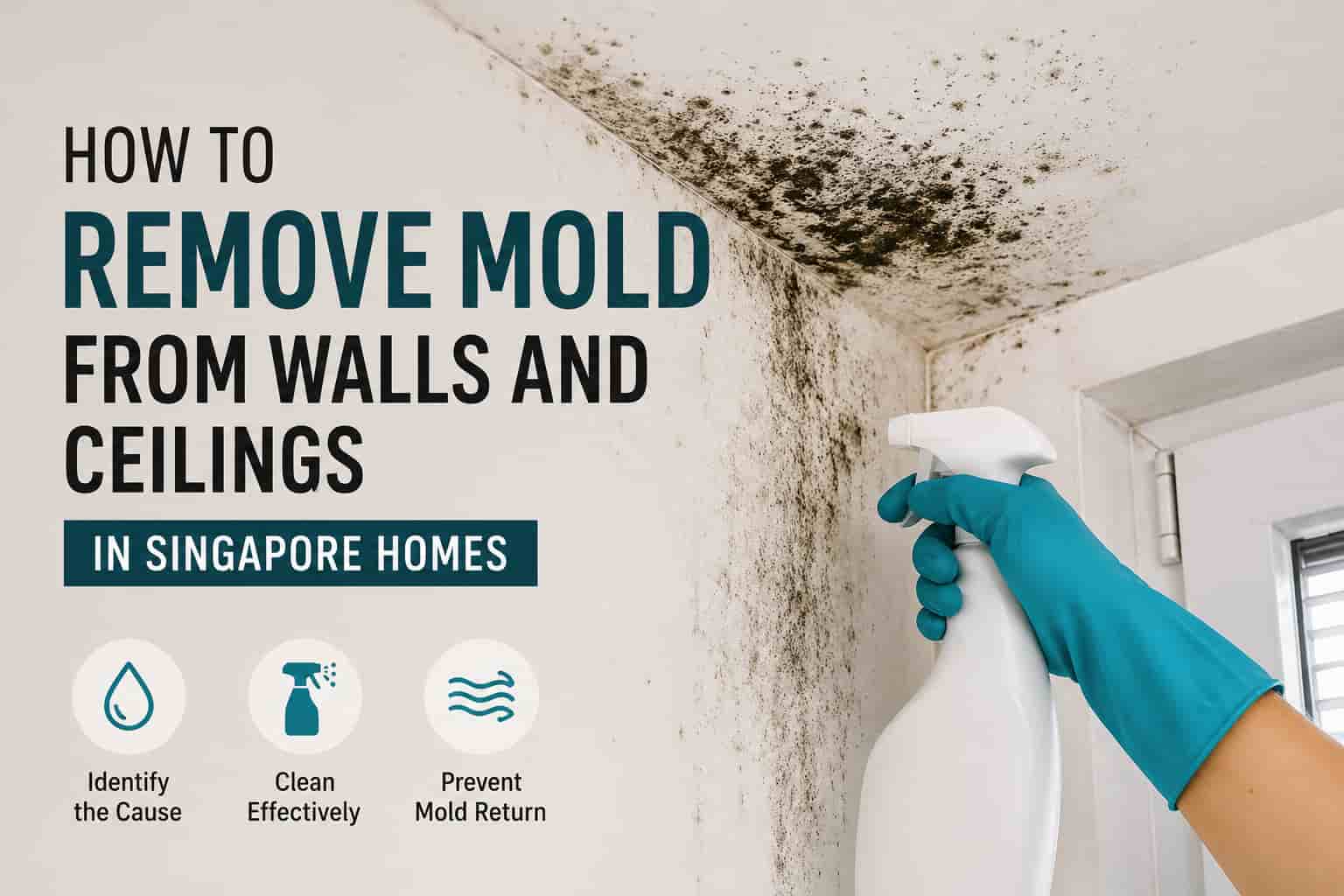
Mold is one of the most common and frustrating problems faced by homeowners in Singapore. It often appears quietly at first, showing up as small black or green patches on walls and ceilings. Many people ignore it in the early stages, assuming it is only a cosmetic issue. In reality, mold is a sign of deeper environmental conditions within the home that need attention.
Singapore’s humid climate creates the perfect conditions for mold to grow. Warm temperatures combined with high moisture levels allow mold spores to multiply quickly, especially in areas where ventilation is limited. Once it starts, mold can spread across surfaces and become more difficult to manage if not handled properly.
Understanding how to remove mold effectively and prevent it from returning is essential for maintaining a clean, healthy, and comfortable living space.
Why Mold Forms So Easily in Singapore Homes
The primary reason mold develops in Singapore homes is moisture. Humidity levels remain high throughout the year, and even small amounts of trapped moisture can lead to mold growth over time. When moisture is not properly ventilated or dried, it settles into walls, ceilings, and hidden corners, creating an environment where mold thrives.
Common areas where mold appears include bathrooms, especially near ceilings above showers, kitchen walls where steam accumulates, and bedrooms where air conditioning units create condensation. Corners of walls and areas behind furniture are also common spots because airflow is restricted.
Even newly renovated homes are not immune. If moisture becomes trapped during or after renovation work, mold can develop within a short period. This is why maintaining proper airflow and dryness is critical from the beginning.
Early Signs That Mold Is Developing
Mold rarely appears suddenly in large amounts. It usually starts small and spreads gradually. Recognising early warning signs allows homeowners to take action before the problem becomes severe.
Typical signs include dark spots on walls or ceilings, a persistent musty smell, and areas where paint begins to peel or discolor. In some cases, surfaces may feel damp even when there is no visible water source. These are indicators that moisture is present and mold is beginning to form.
Ignoring these signs often leads to larger patches that require more effort to remove. Acting early reduces both the time and cost involved in managing mold.
Why Mold Should Never Be Ignored
Mold is not just an appearance issue. It affects both the condition of your home and the health of the people living in it. Mold releases spores into the air, which can trigger allergies, respiratory discomfort, and other health concerns, especially for children and elderly family members.
From a property perspective, mold can weaken surfaces over time. It can damage paint, stain walls permanently, and even affect structural materials if left untreated for long periods. What starts as a small patch can turn into a widespread problem that requires extensive repairs.
This is why mold removal should always be treated as a priority.
Preparing to Remove Mold Safely
Before attempting to clean mold, it is important to prepare properly. Mold spores can become airborne during cleaning, which increases the risk of inhalation. Basic protective measures help reduce exposure and make the cleaning process safer.
Wearing gloves and a mask is recommended, especially when dealing with larger areas. Keeping windows open improves ventilation and helps reduce moisture in the air. It is also important to ensure that the affected surface is not overly wet before cleaning begins, as excess moisture can worsen the problem.
Taking these precautions ensures that the cleaning process is both effective and safe.
Step-by-Step Process to Remove Mold from Walls
Removing mold from walls requires a controlled approach. Rushing the process or using excessive water can cause mold to spread further instead of eliminating it.
Start by gently wiping the affected area to remove loose mold particles. Then apply a suitable cleaning solution that is safe for painted surfaces. Allow the solution to sit briefly so it can break down the mold. After that, wipe the area again using a clean cloth.
It is important to avoid soaking the wall. Using too much liquid increases moisture, which encourages mold to return. Once the cleaning is complete, drying the surface thoroughly is essential. Proper drying prevents remaining spores from growing again.
Cleaning Mold from Ceilings Without Causing Damage
Ceilings require extra care because of their position and the risk of spreading moisture to other areas. Mold on ceilings is often caused by condensation, especially in bathrooms or rooms with poor ventilation.
When cleaning ceilings, use minimal liquid and apply it carefully to avoid dripping. A stable ladder or support should always be used to ensure safety during the process. Gentle cleaning is more effective than aggressive scrubbing, which can damage the surface and spread spores.
After cleaning, ensure the ceiling is completely dry. Without proper drying, mold can reappear within a short period.
When Mold Indicates a Bigger Problem
Sometimes mold is a sign of a deeper issue within the home. If mold continues to return even after cleaning, it may indicate hidden moisture problems such as leaks, trapped humidity, or poor ventilation.
In these situations, removing visible mold is only a temporary solution. The underlying cause must be addressed to prevent recurrence. Maintaining consistent cleanliness across the home helps reduce these risks, especially in high-moisture environments.
Some homeowners choose to maintain regular upkeep with a house cleaning service in Singapore to ensure that hidden areas, corners, and moisture-prone spaces are consistently managed. This helps prevent mold from developing unnoticed over time.
Mold Risks After Renovation Work
Mold can appear even in homes that have recently undergone renovation. During renovation, dust, moisture, and fine particles settle into surfaces. If these are not removed properly, they create the perfect conditions for mold to grow.
This is why proper post renovation cleaning is important. It ensures that dust residues and hidden moisture are cleared before daily living begins. Without this step, mold can develop quickly even in a newly upgraded home.
Keeping the environment dry and well-ventilated after renovation further reduces the chances of mold forming in concealed areas.
Mold Issues During Moving and Handover
Mold is also commonly discovered during moving periods. When moving into a new home, mold may already be present due to the previous occupant’s cleaning habits or moisture issues. When moving out, mold can affect inspection outcomes and create disputes if not handled properly.
Ensuring that the property is thoroughly cleaned before handover helps prevent complications. Many tenants and homeowners rely on a move out cleaning service to ensure that all areas, including hidden corners and moisture-prone spots, are properly addressed.
This approach helps maintain property standards and ensures a smoother transition between occupants.
Preventing Mold from Returning
Prevention is always more effective than repeated removal. The key to preventing mold is controlling moisture and improving airflow within the home.
Keeping windows open when possible allows fresh air to circulate and reduces humidity. Using exhaust fans in bathrooms and kitchens helps remove moisture from daily activities such as showering and cooking. Avoiding the buildup of dampness on walls and ceilings is essential.
Regularly checking areas that are prone to moisture allows homeowners to catch early signs before mold spreads.
Managing Humidity Effectively
Humidity control is one of the most important factors in preventing mold. Air conditioning helps reduce moisture levels, but it must be maintained properly. Dirty air conditioning units can create condensation and contribute to mold growth instead of preventing it.
Dehumidifiers can be used in areas where humidity is consistently high. These devices help maintain a balanced environment where mold is less likely to develop.
Managing humidity is not a one-time effort. It requires consistent attention, especially in Singapore’s climate.
Common Mistakes That Make Mold Worse
Many homeowners unintentionally make mistakes when trying to remove mold. Using excessive water is one of the most common issues. While it may seem logical to clean thoroughly, too much moisture actually encourages mold growth.
Another mistake is scrubbing too aggressively. This can spread mold spores to surrounding areas, making the problem larger. Cleaning only visible mold without addressing underlying moisture also leads to repeated growth.
Understanding these mistakes helps improve the effectiveness of mold removal efforts.
Long-Term Impact of Ignoring Mold
Ignoring mold can lead to significant long-term consequences. Over time, mold spreads across surfaces and becomes embedded in materials. This may require repainting or replacing affected areas.
Mold also affects indoor air quality. Poor air quality impacts comfort and health, making the home less pleasant to live in. Addressing mold early prevents these issues and keeps maintenance manageable.
A Practical Approach for Singapore Homeowners
Managing mold in Singapore requires a combination of proper cleaning, moisture control, and consistent maintenance. There is no single solution that works permanently without ongoing effort.
Homeowners should focus on early detection, safe removal methods, and preventive measures. Keeping the home dry, well-ventilated, and regularly maintained reduces the likelihood of mold returning.
For busy households, maintaining this consistency can be challenging. Finding practical ways to manage cleaning and moisture helps create a stable environment that supports long-term cleanliness.
Keeping Mold Under Control in Daily Living
Mold is a common issue in Singapore homes, but it does not have to become a persistent problem. With the right approach, it can be managed effectively and prevented from returning.
By understanding how mold forms, removing it carefully, and maintaining a clean and dry environment, homeowners can protect both their living space and their health. A consistent approach ensures that mold remains under control and does not disrupt daily life.
Frequently Asked Questions About Mold in Singapore Homes
1. What causes mold on walls and ceilings in Singapore homes?
Mold develops due to high humidity and trapped moisture. Poor ventilation and condensation in areas like bathrooms and bedrooms allow mold to grow quickly.
2. Why does mold keep coming back after cleaning?
Mold returns when moisture is still present. Cleaning removes the surface layer, but without fixing ventilation or humidity issues, mold will grow again.
3. Can I remove mold from walls myself?
Small patches can be removed with proper cleaning methods. Larger or recurring mold problems usually require deeper cleaning and moisture control.
4. How can I prevent mold from growing again?
Keep your home dry and well-ventilated. Use exhaust fans, reduce humidity, and avoid moisture buildup on walls and ceilings.
Useful Articles To Read
- Bathroom and House Sewage Odor Issues in Singapore Homes
- Why Your Home’s Cleanliness Matters After Pipe Leaks
- 10 Aircon Cleaning Mistakes That Cause Dust at Home
- 9 Carpet Cleaning Tips to Prevent Dust and Odours in Singapore Homes
- Top 10 Curtain Cleaning Tips for Singapore Homeowners
- Top 9 Drain Cleaning and Unclogging Tips for Singapore Homes
- How to Maintain a Clean and Healthy Home with Kids and Pets
- Top 10 House Cleaning Smart Tips for Everyday Home Care in Singapore
- Air Fresheners: A Comprehensive Guide to Freshening Up Your Space
- Pest Control: How to Keep Your Home Pest-Free During Monsoon Season in Singapore
- How to Deep Clean Toilets and Bathrooms Before Moving Out in Singapore
- Moving Into a New Home: 11 Things to Do Before You Settle In
